


The Unthinkable, or the Unsinkable?

Is Brazil Ready for the Ground to Move
eyesonbrasil
On the night of June 24, 2026, two earthquakes tore through north-central Venezuela within 39 seconds of each other — magnitude 7.2, then 7.5, the strongest the country had recorded in more than a century. Buildings collapsed in Caracas, Valencia, and Chacao. Thousands were injured, and the death toll climbed into the thousands in the weeks that followed. That story, tragically, belonged to Venezuela.
But something odd happened more than 600 kilometers away, across an international border, in a country that isn’t supposed to feel earthquakes at all: chandeliers swayed in Manaus. Streets were blocked in Belém as panicked residents poured outside. In Belém alone, six buildings were evacuated as a precaution — in the neighborhoods of Umarizal, Jurunas, Cremação, and Pedreira — while fire departments carried out inspections in Belém, Santarém, Macapá, and Boa Vista. No structural damage was found, no injuries reported. But the unease that rippled through Brazil’s northern capitals that night raised a question the country rarely asks itself: what if it happens here?
A country that “doesn’t have earthquakes” — until it does
Brazil sits in the middle of the South American tectonic plate, far from the plate boundaries where the planet’s most violent quakes occur — the kind that leveled parts of Caracas, that flattened Port-au-Prince in 2010, that devastated Turkey and Syria in 2023. Being in the interior of a stable continental plate is, geologically speaking, about as safe a place as exists on Earth. This is the main reason Brazilian building codes have never treated seismic design as a first-order priority, and why most Brazilians have simply never thought about it.
But “stable” doesn’t mean “immune.” Intraplate earthquakes — smaller, harder to predict, but real — happen inside continental interiors all the time, just less frequently and usually at lower magnitudes than at plate boundaries. Brazil has its own quiet history of them: seismic swarms in João Câmara, Rio Grande do Norte, in the 1980s; tremors felt periodically in Mato Grosso, Minas Gerais, and along fault systems that geologists are still mapping. None of them approached the destructive power of what happened in Venezuela. But they were a reminder that “doesn’t have earthquakes” was always more myth than certainty.
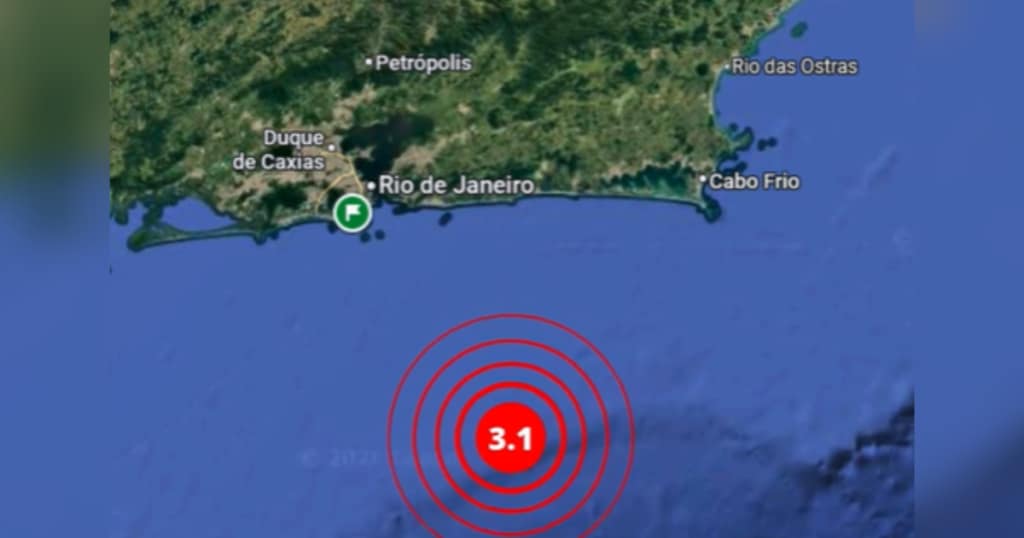
It was partly in response to this that Brazil’s technical standards body, ABNT, approved NBR 15421 back in 2006 — a code establishing seismic-resistance requirements for construction. Two decades later, engineers and industry voices still describe compliance as inconsistent and enforcement as thin, since a hazard so rare, in a country with so many louder, more immediate problems, rarely wins fights for budget or attention.
The building next door might not need an earthquake to fail
Here’s the harder truth: Brazil doesn’t need a magnitude-7 earthquake to have a building collapse. It has already had several, without any seismic activity at all.
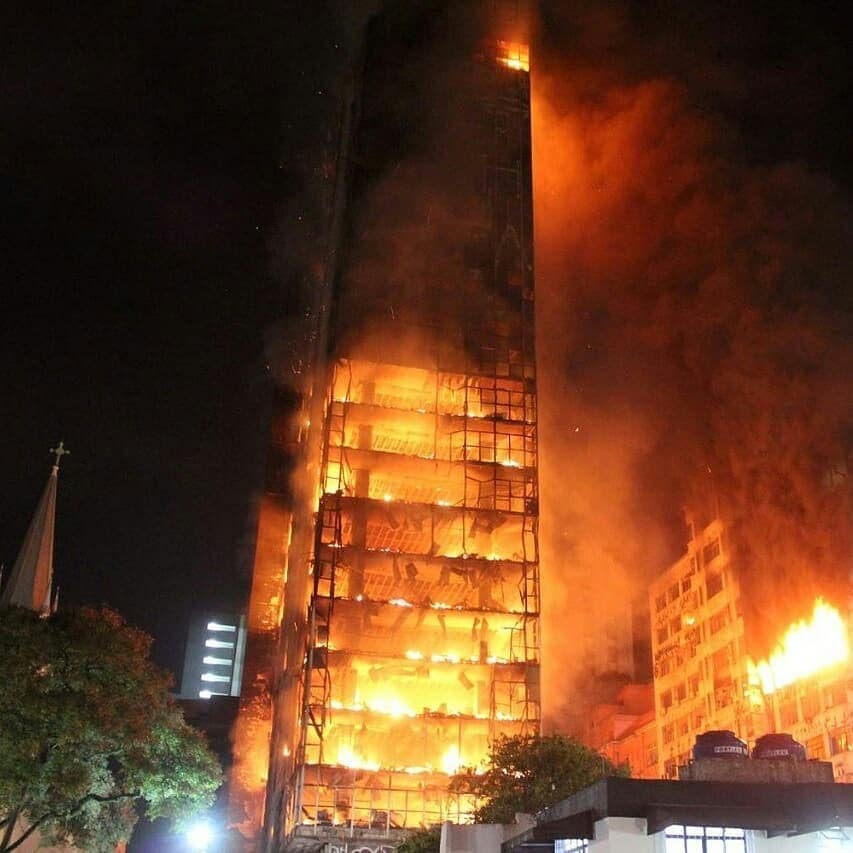
In February 1998, the Palace II building in Rio de Janeiro partially collapsed, killing eight people and leaving 120 families homeless — the official investigation blamed a structural design error in the columns combined with poor construction execution. In 2012, three aging buildings collapsed in Rio’s historic downtown in a single, shocking cascade, less than two weeks before another partial collapse struck São Bernardo do Campo, in São Paulo state. In 2018, the 24-story Wilton Paes de Almeida building — built in the 1960s, abandoned for nearly two decades, and irregularly occupied by dozens of families — caught fire and came down in the middle of São Paulo, its mixed concrete-and-steel structure buckling faster than engineers expected.
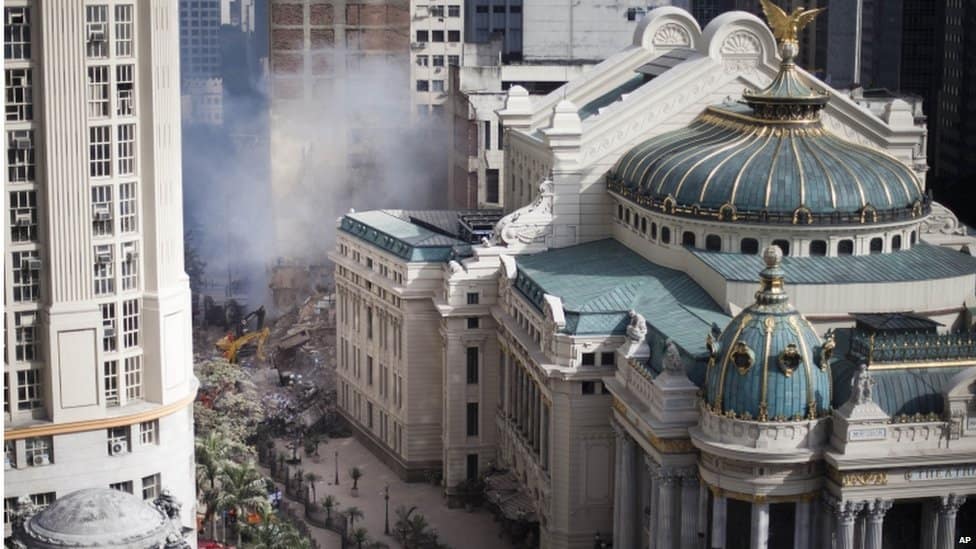
None of these were earthquakes. They were failures of maintenance, inspection, and time itself acting on reinforced concrete — the material that makes up the overwhelming majority of Brazil’s urban skylines, from the beachfront towers of Rio’s Copacabana to the dense high-rise canyons of São Paulo’s Avenida Paulista.
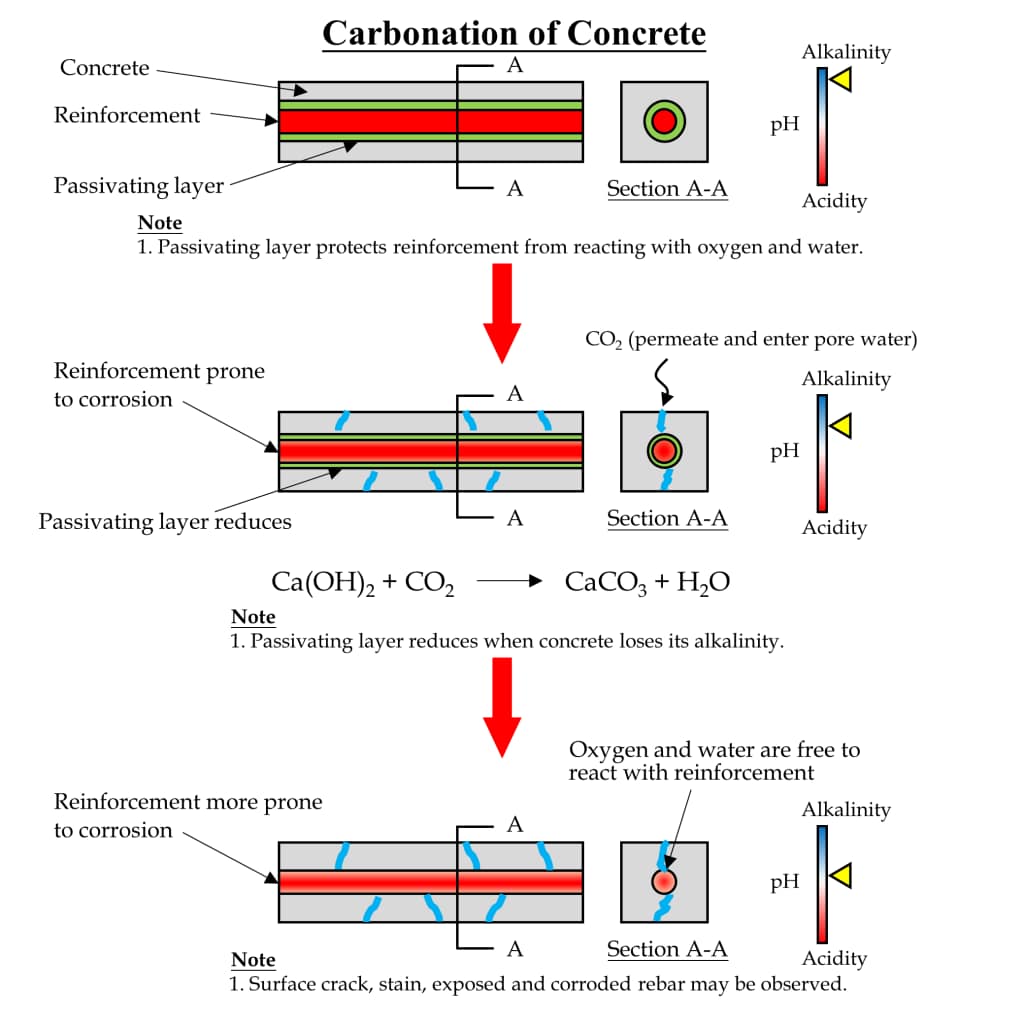
Reinforced concrete does not last forever. Brazilian technical standards (NBR 6118) generally assume a design service life around 50 years for structures built to modern specifications, and engineers note that buildings constructed with the thinner concrete cover and lower-strength mixes common before the 2000s may see that clock run out even faster — while others, with excellent materials and diligent upkeep, can last 80, 100 years or more. Carbonation and chloride penetration — slow chemical processes triggered by air, humidity, and salt — gradually reach the steel reinforcement bars buried inside the concrete, corroding them from the inside, expanding, cracking, weakening. It is an invisible clock, ticking inside pillars nobody looks at until something falls off a ceiling.
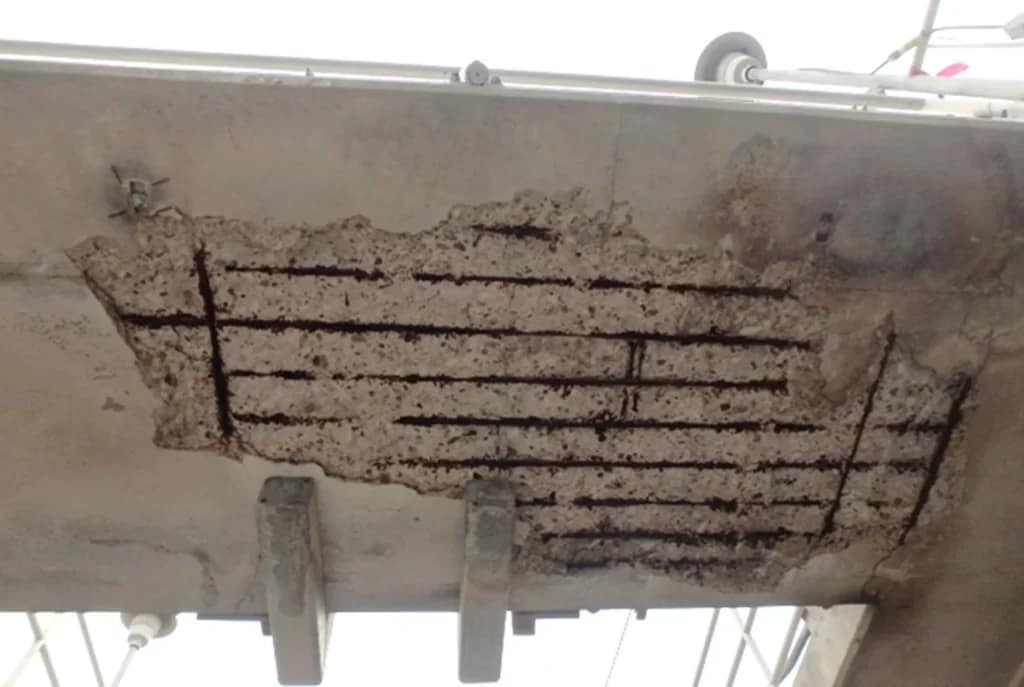
That clock matters enormously for São Paulo and Rio de Janeiro, two cities where the great vertical building boom began in earnest in the 1930s and 40s and never really stopped. A meaningful share of the high-rises put up in that first wave are now approaching, or have already passed, 80 years of age — built under construction standards, inspection regimes, and quality-control practices that would look primitive by today’s expectations, and often without the kind of rigorous, continuous maintenance that keeps concrete structures healthy over decades.
Two risks wearing one face
This is where the Venezuela earthquake and Brazil’s aging concrete stock start to look less like two separate stories and more like two versions of the same underlying question: how well does Brazil actually know the condition of the buildings its people live and work in?
An earthquake is a sudden, violent test of a structure’s reserves — its ability to flex, absorb, and redistribute forces it was never quite designed for. A deteriorating 80-year-old concrete frame is a slow-motion version of the same test, except the “shaking” is corrosion, added floors, illegal renovations, leaking pipes, and decades of deferred maintenance, and the failure — when it comes — tends to arrive without any external trigger at all. Brazil doesn’t need tectonic plates to misbehave for a Palace II or a Wilton Paes de Almeida to happen again. It only needs inspection regimes to keep being treated as optional.
What made June 24 unsettling wasn’t that Brazilian buildings were ever actually at serious risk from a quake centered 600 kilometers away in another country — seismologists were clear that distance made major damage on Brazilian soil extremely unlikely, and events unfolded exactly as they predicted. What made it unsettling was the reminder that Brazilian cities have almost no living memory, no institutional muscle, no evacuation reflex for feeling the ground move. Residents in Belém didn’t know whether to stay, leave, or laugh nervously and film it for social media. A seismologist quoted afterward made a simple, pointed observation: regardless of whether the quake originates locally or travels from a neighboring country, “any and every building needs to learn how to evacuate” — not just because of earthquakes, but because that same discipline, that same culture of taking early warning signs seriously, is exactly what’s missing when a crack widens in a 1940s facade and nobody reports it until it’s too late.
Unthinkable, or just underestimated?
Brazil is not Venezuela, and it is not Turkey. Its geology genuinely spares it from the kind of catastrophic, plate-boundary earthquakes that flatten cities in minutes — that much of the reassurance offered by scientists after the June tremors was accurate and well-founded, not spin. A magnitude-7 quake devastating São Paulo or Rio is, by any reasonable geological accounting, close to unthinkable.
But “unthinkable” has a dangerous way of becoming “unexamined.” The real risk facing Brazil’s biggest cities isn’t a rerun of Caracas. It’s the possibility that a country reassured by its own tectonic luck keeps neglecting the slower, quieter, entirely homegrown threat sitting in its own skyline — concrete pillars poured in 1945, inspected rarely, renovated illegally, and trusted completely, simply because the ground beneath them has, so far, always stayed still.
The ground doesn’t need to shake for a building’s luck to run out. Sometimes it just needs everyone to keep assuming it never will.
Sources: Agência Brasil, CNN Brasil, ND+, Roraima1, and the Portuguese Wikipedia entry on the 2026 Venezuela earthquakes; AECweb, MAPFRE Global Risks, CREA-SC, and Civilização Engenheira on Brazilian seismic codes and concrete durability; SESC São Paulo and Terra on historical Brazilian building collapses.