



The Cable That Skipped America

How EllaLink Rewired Brazil’s Connection to the World
eyesonbrasil
Six thousand kilometers beneath the Atlantic, a bundle of glass fibers no thicker than a garden hose is quietly reshaping how Brazilians reach the internet. It has no name most people would recognize, no flashy headquarters, and no consumer-facing app. But EllaLink may be one of the most consequential pieces of infrastructure Brazil has built in the last decade — and it did something that, for over twenty years, nobody had managed to do: connect South America directly to Europe.
A Straight Line Where There Was Only a Detour
For more than two decades, there was no practical direct data route between Europe and South America. The only old link, a cable called Atlantis-2, was too limited in capacity to carry meaningful internet traffic. So every email, video call, bank transaction, or streaming request that needed to travel between, say, São Paulo and Lisbon had to take a long way around — typically routed up through Miami or other U.S. hubs before crossing the Atlantic to Europe.
That detour wasn’t just inconvenient. It added delay, added cost, and — as became a growing political concern — added a layer of dependency on American infrastructure. One of EllaLink’s founding goals was explicitly to bypass the United States and its upstream data collection, since routing everything through American infrastructure gave U.S. intelligence agencies a structural vantage point over European and South American communications. Brazil’s own government took this seriously: then-President Dilma Rousseff argued in 2014 that a direct cable would be essential to guaranteeing the neutrality of the internet for the region.
EllaLink is the answer to that problem, built in physical form.
The Cable Itself
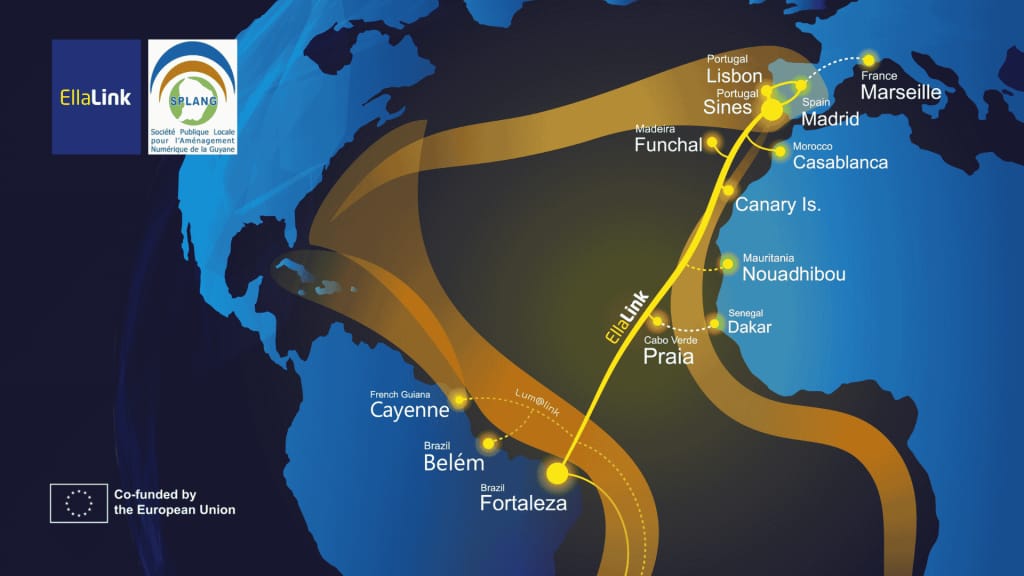
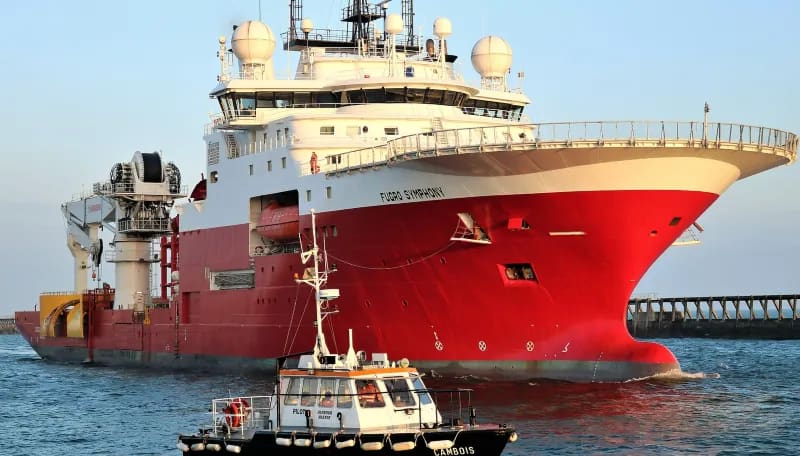
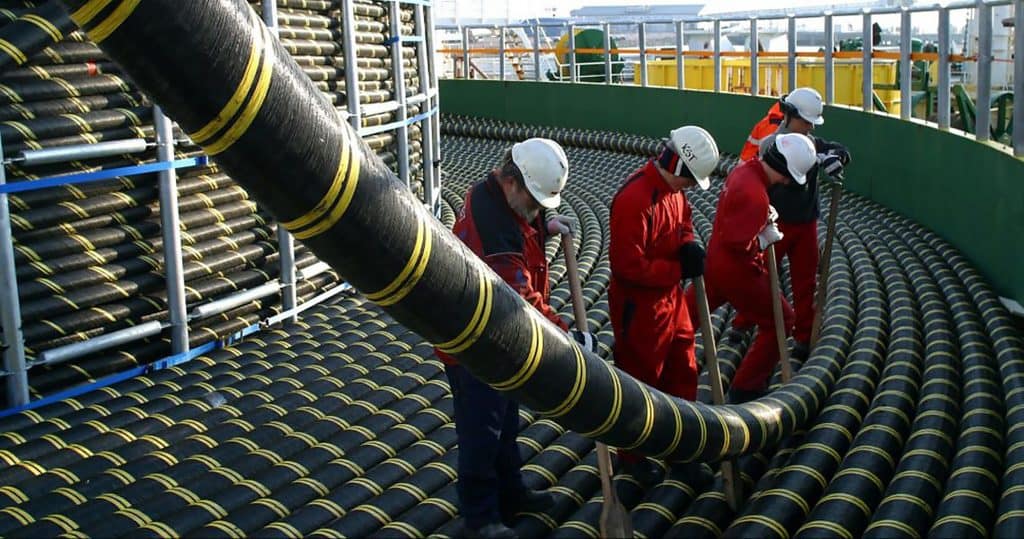
The system links major hubs including São Paulo and Fortaleza in Brazil with Lisbon and Madrid in Europe, with its core Sines-to-Fortaleza span stretching approximately 5,900 kilometers across the Atlantic seabed — other sources round this to roughly 6,000 km end to end. It went live on June 1, 2021, the culmination of a project that had formed back in 2012, began construction planning in 2015, awarded its supply contract to Alcatel Submarine Networks in 2017, and finally saw the physical cable laid starting in December 2020 by two specialized ships, the Ile de Bréhat and the Ile de Sein.
The numbers are genuinely staggering. The system delivers 100 terabits per second of total capacity across four fiber pairs, with up to 25 Tbps available per pair. To put that in perspective, a single terabit per second is enough to stream roughly 200,000 simultaneous HD video calls — and EllaLink can theoretically push a hundred times that between the two continents.
Just as important as the raw bandwidth is the latency. EllaLink offers round-trip delay of under 60 milliseconds between Portugal and Brazil, currently the lowest on the market — a latency reduction of up to 50% compared to the traditional route between Latin America and Europe. For financial trading firms, cloud providers, and gaming companies, that kind of shave in milliseconds is not a nice-to-have; it can be the difference between a competitive and uncompetitive service.
Why Fortaleza?
Fortaleza wasn’t chosen at random. With more than 16 international cables making landfall there, the Ceará state capital is already the largest hub for fiber-optic connections in the world — a legacy of its geography, sitting on Brazil’s northeastern tip, closest to Africa and Europe of any major Brazilian city. EllaLink’s cable comes ashore at Telxius’ data center in Fortaleza, on an open-access basis, meaning any carrier can plug into the capacity rather than it being locked to a single operator. From that landing station, traffic is extended onward to São Paulo and Rio de Janeiro on the Brazilian side, and from Sines to Lisbon, Madrid, and Marseille on the European side.

On the European end, the cable comes ashore at Sines, Portugal — and Portugal’s then-Prime Minister António Costa framed the launch as part of turning Sines, one of Europe’s key gateway ports, into a major continental data hub in its own right.
What This Actually Changes for Brazil
The upgrade isn’t abstract. It touches several concrete layers of how the internet works for Brazilian users and businesses:
Speed and reliability. With traffic no longer forced through a U.S. bottleneck, latency between Brazil and Europe drops by as much as 50%, directly benefiting cloud services, electronic banking, entertainment streaming, and online gaming for anyone whose data now takes the direct route instead of the old detour.
Resilience. More cables landing in more places means fewer single points of failure. A direct Brazil–Europe path gives the region’s internet traffic an alternative route if congestion, damage, or outages hit the traditional U.S.-routed cables — this kind of path diversity is exactly what network engineers mean when they talk about internet resilience.
Research and science. The BELLA Consortium — bringing together European and Latin American research and education networks — was one of the direct beneficiaries of the new route, since scientific collaboration increasingly depends on moving enormous research datasets quickly between continents.
Regional expansion. EllaLink hasn’t stood still since 2021. A branch to Cape Verde went live in 2022 with up to 30 Tbps of capacity, and in January 2024 EllaLink signed a contract for a new 2,100-km extension to French Guiana, part of a broader pattern of the network reaching further into the South Atlantic and West Africa. The company has also expanded its footprint within the Fortaleza data center itself to keep pace with demand, and is pursuing further extensions toward Mauritania.
Investment and jobs. Then-Governor of Ceará, Camilo Santana, pointed to roughly 1 billion reais in private investment that went into bringing the cable into operation, underscoring that this is also a story about regional economic development, not just data plumbing.
None of this means Brazil’s internet infrastructure is “finished” — no country’s ever is — but EllaLink represents a structural shift: Brazil now has a modern, high-capacity, low-latency, direct lane to Europe that didn’t exist for the entire prior history of the commercial internet.
A Final Thought: Why the Internet Still Runs Through Pipes on the Ocean Floor
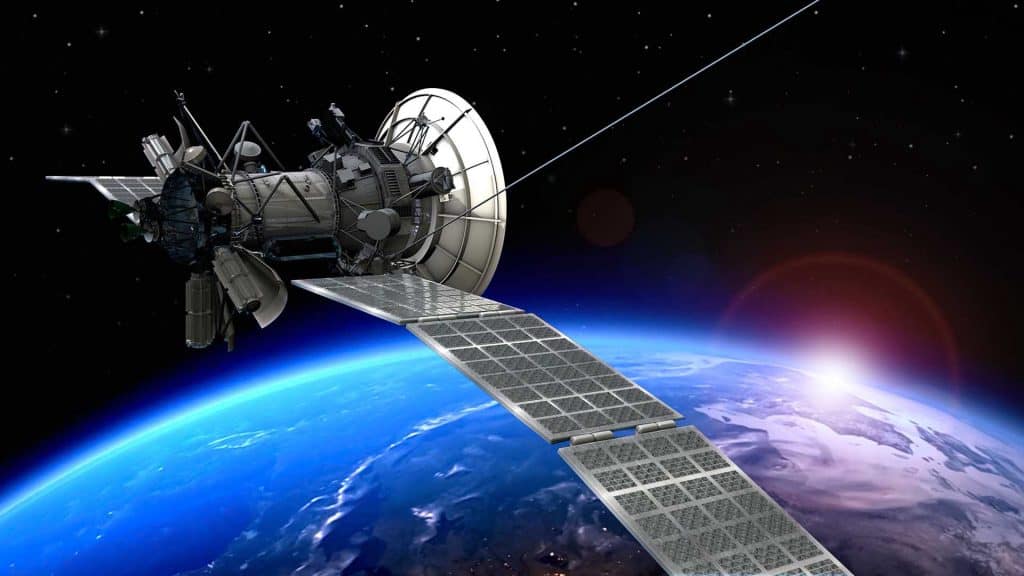
Here’s the part that surprises most people: despite satellites getting all the headlines — Starlink, Kuiper, and the rest — the overwhelming majority of international internet traffic, including nearly all of the data moving between continents, still travels through cables like EllaLink lying on the seafloor. Today, 426 undersea fiber-optic cables span a mesh of 1.6 million kilometers across the world’s oceans, carrying the vast bulk of intercontinental data.
Why hasn’t satellite technology replaced this? A few physical and economic realities explain it:
Light in glass is astonishingly efficient. A single fiber-optic strand can carry tens of terabits per second using light pulses, with signal loss low enough that repeaters only need to boost it every so often across thousands of kilometers. No radio-frequency wireless technology — including satellite links — comes remotely close to that throughput per physical link.
Latency actually favors cables, not satellites, for most orbits. It’s counterintuitive, but a well-routed subsea cable running in a fairly straight line often beats traditional geostationary satellites on delay, since geostationary satellites sit around 36,000 km up — meaning a huge round-trip distance for every signal. Modern low-earth-orbit constellations have closed much of this gap, but a direct fiber route like EllaLink still competes very favorably.
Cost per bit is dramatically lower for cables. Laying a cable is a massive upfront expense, but once it’s down, it can carry decades of traffic at a fraction of the cost per gigabyte compared to satellite bandwidth, which is inherently more limited and shared across many users in a coverage area.
Capacity, not just coverage, is what the modern internet needs. Streaming video, cloud computing, and AI workloads move staggering volumes of data continuously. Satellites are extraordinary for reaching remote or mobile locations without existing infrastructure, but they aren’t built — today — to move 100 Tbps between two fixed continental hubs the way a cable like EllaLink can.
So satellites and cables aren’t really competitors; they’re complements. Satellites shine at reaching ships, planes, rural regions, and disaster zones. Cables shine at moving oceans of data cheaply and quickly between major population centers. That’s precisely why, even in an age of reusable rockets and sprawling satellite constellations, the physical backbone of the global internet is still — quite literally — buried in the sand at the bottom of the sea.
Sources
- EllaLink — Wikipedia
- EllaLink — Submarine Networks
- EllaLink official site
- EllaLink press release — Fortaleza/Sines connection
- European Commission — Shaping Europe’s Digital Future
- EllaLink press release — Telxius Fortaleza expansion
- Macau News — EllaLink boosts Europe-Brazil connections