



The Streamer Who Out-Broadcasted a Broadcasting Giant

eyesonbrasil
For 54 straight years, watching the World Cup in Brazil meant watching Globo. The network had aired every tournament since 1970, building a viewing ritual so entrenched it barely registered as a choice. In 2026, that streak ended — not because a rival network finally out-bid Globo, but because a 31-year-old from Rio de Janeiro who dropped out of journalism school built a YouTube channel that now out-scales the most powerful media company in the country.
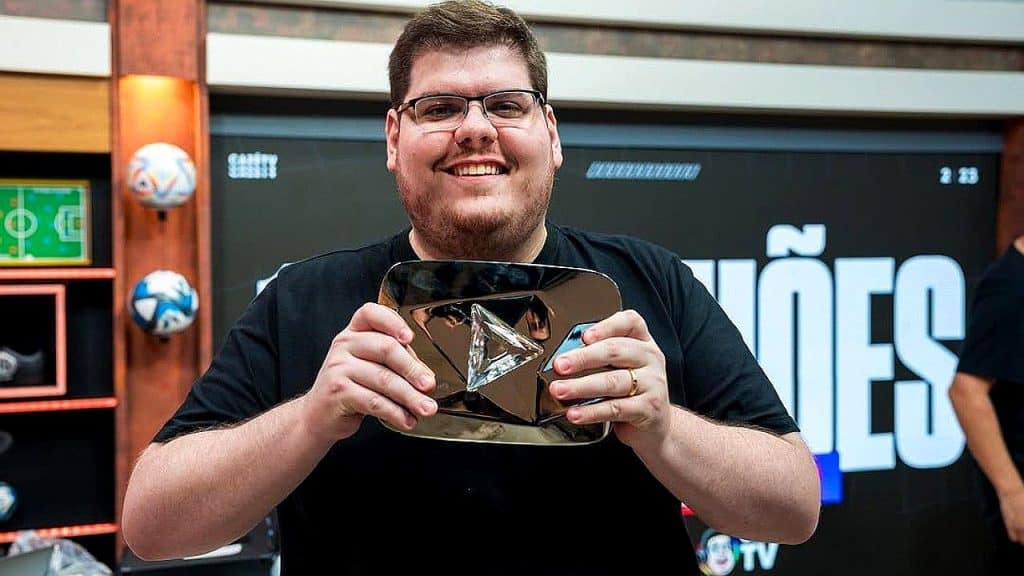
His name is Casimiro Miguel. His channel is CazéTV. And the story of how it got here says as much about the future of sports broadcasting as it does about the growing pains of trying to regulate it.
From Twitch Reactions to FIFA Rights Holder
CazéTV’s rise wasn’t an overnight accident — it was a gap the incumbents left wide open. In 2021, a change in Brazilian law let clubs sell their own streaming rights, cracking open a market Globo had locked down for a generation. Casimiro, who had spent 2020 and 2021 streaming Brazilian league matches on Twitch, moved into that gap, backed by LiveMode, a sports-rights firm founded by veterans of Brazilian sports media who understood how to grow an audience the giants had stopped paying attention to.
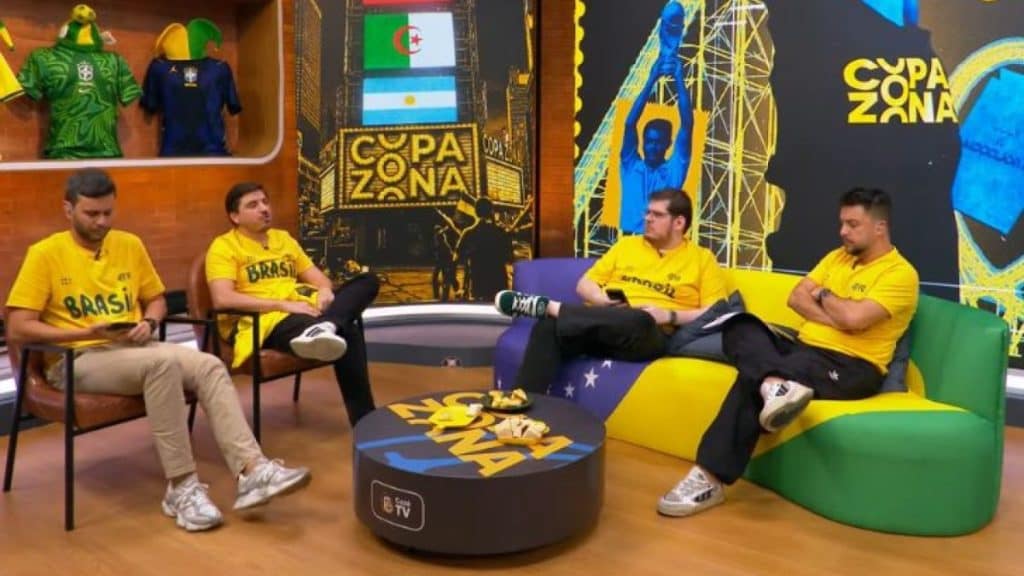
The real turning point came during the 2022 World Cup in Qatar. No traditional Brazilian broadcaster was willing to meet FIFA’s asking price for the tournament’s digital rights, so LiveMode struck a deal with FIFA directly, and CazéTV launched to stream 22 matches. The opening game pulled around a million viewers; by the time Brazil was eliminated in the quarter-finals, the channel was peaking at 6.9 million. The model had proven itself.
For 2026, CazéTV expanded that foothold into something unprecedented: it became the only Brazilian broadcaster showing all 104 World Cup matches, live and completely free, while Globo carries just over half the tournament and SBT splits the rest. A channel that didn’t exist before late 2022 had out-scaled a media empire that had owned Brazilian soccer broadcasting for over half a century.
Breaking the Internet, One Match at a Time
The numbers CazéTV has posted this tournament are difficult to overstate. Its broadcast of Brazil vs. Morocco pulled 12.2 million simultaneous viewers — the largest live audience in YouTube’s history, surpassing even a moon-landing broadcast. That record didn’t last: the channel later peaked at 17.8 million simultaneous connections during Brazil’s win over Scotland, and it says it hit 21.3 million connected devices during the win over Japan. CazéTV now holds six of the ten biggest live audiences YouTube has ever recorded — for a free stream, produced by a channel with 32.5 million subscribers, hosted by a guy who talks to the chat like it’s a group call with friends rather than reading off an autocue.
That informality is the entire product. Where Globo’s coverage is polished, institutional, and scripted, CazéTV feels like watching the match with a very online friend who happens to have full access to the broadcast truck. When Cape Verde’s 40-year-old backup goalkeeper Vozinha became the folk hero of their historic draw with Spain, CazéTV didn’t just cover the moment — it pointed its audience directly at his Instagram and told them to go follow him. He passed a million new followers within minutes.
Globo has noticed. It launched its own free digital sports platform, ge TV, widely read as a direct response to CazéTV’s rise — the clearest sign yet that the disruption is real, because the incumbent is now copying the disruptor.
Where the Story Actually Gets Complicated
Here’s where the narrative that’s spread online — that the Lula government simply tried to shut CazéTV down — needs some untangling, because what actually happened is both messier and more interesting than that.
The friction didn’t start over broadcast rights or streaming itself. It started over gambling ads. CazéTV’s coverage leaned heavily on in-broadcast betting promotions — odds displayed on screen, QR codes, and commentators noting when a bet’s odds had “improved” mid-match. Federal deputy Erika Hilton filed a complaint with Brazil’s federal prosecutors, and Brazil’s consumer protection agency, Senacon, under the Ministry of Justice, opened a preliminary investigation into whether those in-broadcast betting promotions during CazéTV’s World Cup coverage violated consumer protection law. Around the same time, the Ministry of Finance announced new rules restricting sports commentators and broadcasters generally from recommending specific bets or presenting them as easy profit opportunities.
CazéTV responded by overhauling its approach — banning betting ads entirely from live match play and restricting them to pre-game, halftime, and post-game slots, moving toward what it called a more traditional model similar to other networks.
Critics on the right seized on the episode, framing it as the government turning on a broadcaster whose founder had publicly backed Lula in the 2022 election — a irony that generated plenty of social media mockery. Some went further, arguing that concentrating regulatory attention on CazéTV specifically, while Globo, SBT, and Brazilian football clubs themselves also carry betting sponsorships, created the appearance of favoritism toward the traditional broadcaster CazéTV was busy embarrassing in the ratings. Even figures outside the government’s usual critics, including a former Human Rights Minister, called the selective focus on CazéTV worth questioning, arguing any new rules should apply evenly across every outlet running betting ads — not just the disruptor.
The government’s position throughout was that its actions targeted gambling-advertising practices industry-wide, not CazéTV as a broadcaster or FIFA rights holder — officials noted the new rules and notifications extended to betting companies and other media outlets as well. There was never a move to revoke CazéTV’s FIFA rights or pull its stream off YouTube; the actual dispute played out over how betting ads are shown during matches, not whether the matches get shown at all.
Whether the investigation was proportionate, or whether it singled out the platform embarrassing Brazil’s traditional broadcaster, is a genuinely contested political question — and reasonable people in Brazil disagree on it fiercely. What’s not really in dispute is the underlying fact the whole episode revealed: CazéTV had gotten big enough, fast enough, that regulators, rival networks, and members of Congress all found themselves reacting to a YouTube channel the way they once only reacted to Globo.
The Bigger Picture
Whatever happens with the betting-ad rules, the structural shift CazéTV represents looks durable. It has already taken LaLiga rights away from Disney in Brazil, signed more World Cup sponsors than Globo did this cycle, and expanded internationally — including a notable investment tied to Cristiano Ronaldo’s camp — suggesting Casimiro’s team wants this model exported well beyond Brazil.
For over half a century, Brazilian soccer fandom had one home: Globo’s broadcast booth. In 2026, for the first time, it didn’t. A streamer who started with a webcam and a Twitch account now commands a bigger slice of that audience than the network that invented the tradition — and whatever regulatory turbulence comes with that territory, the shift itself isn’t going back.