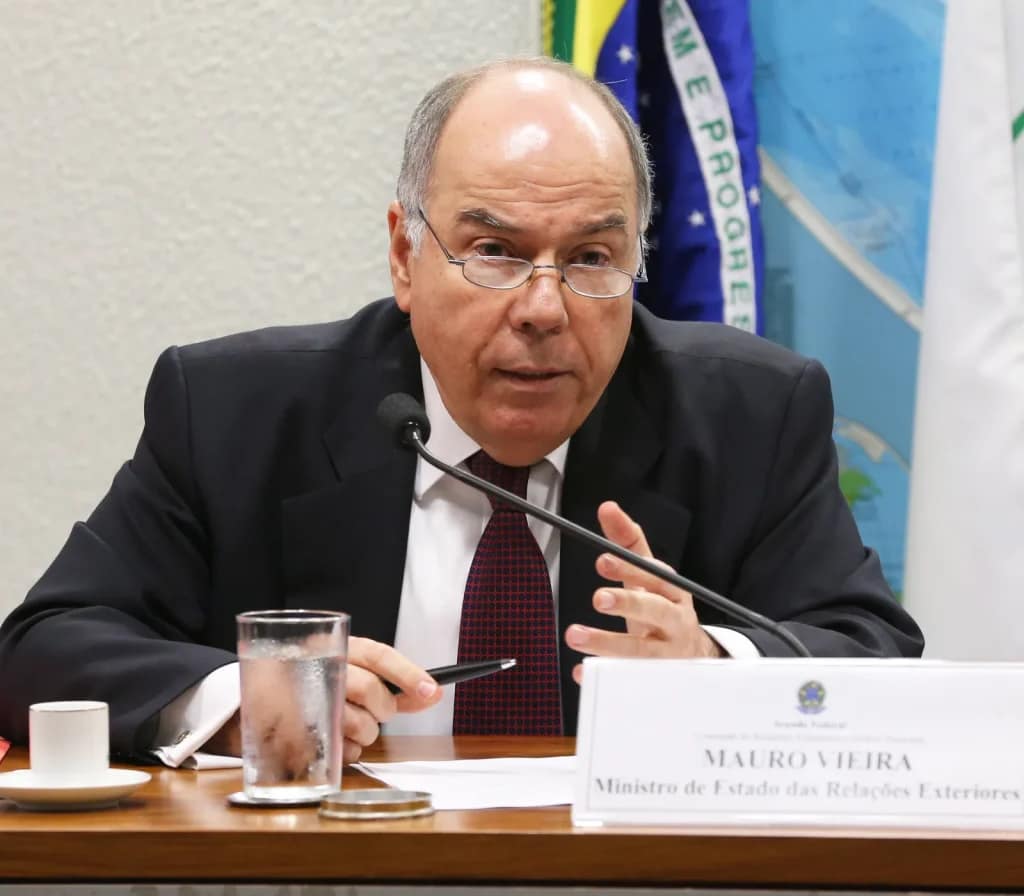
Brazil’s diplomatic establishment rarely uses the language it used this week. In a formal response to the Chamber of Deputies, Foreign Minister Mauro Vieira put in writing something Brazilian officials have mostly avoided saying out loud: that the United States’ terrorism designation of two Brazilian criminal factions carries a genuine risk of American military force being used on Brazilian soil.
Mauro Vieira
That warning, signed personally by the chancellor rather than buried in a lower-level memo, has set off a fresh round of debate in Brasília — over how seriously to take it, and over what, if anything, it has to do with President Lula’s approach to organized crime.
What Itamaraty Actually Said
The document was Itamaraty’s answer to a congressional information request, not a public statement of alarm on its own initiative — but its content was unusually blunt. Vieira wrote that Washington’s unilateral classification “could be invoked as justification for extraterritorial actions against Brazilian institutions, particularly in the financial, migratory, and criminal spheres,” adding that “there is, moreover, the risk of the use of US military force against national territory.” He also noted that, as of the writing, Brazil had received no formal communication from Washington laying out how the designation would be applied — this is Brazil bracing for a possibility, not reacting to an announced operation.
The Designation Behind the Alarm
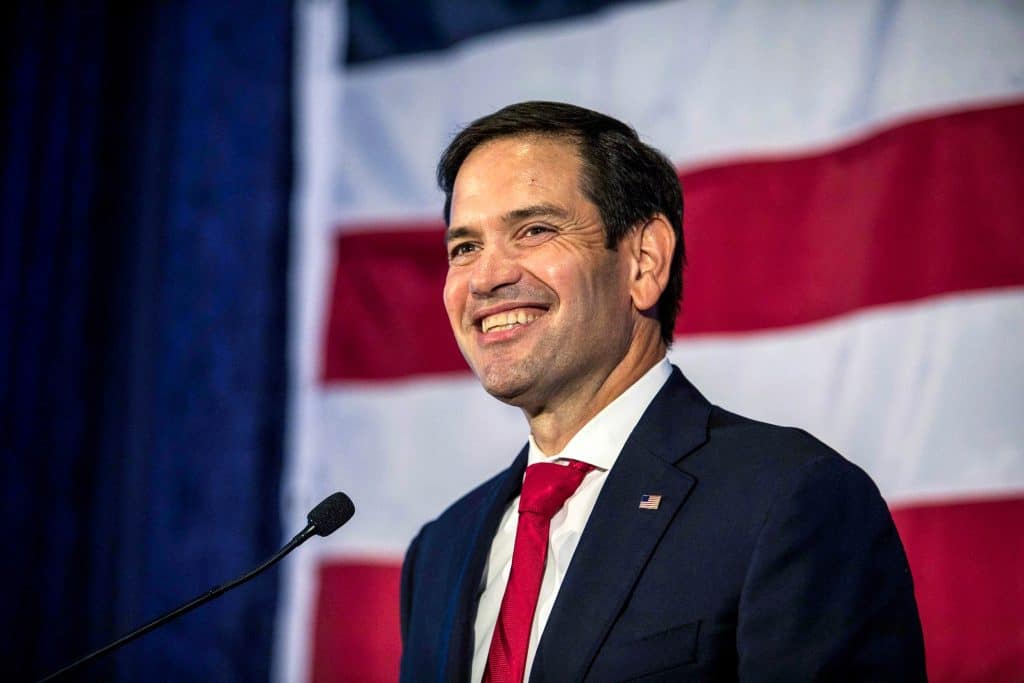
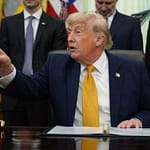
Marco Rubio. Secretary of State
The trigger is real and already in effect. On May 28, 2026, Secretary of State Marco Rubio announced that the State Department was designating Comando Vermelho (CV) and Primeiro Comando da Capital (PCC) — Brazil’s two largest and most violent criminal factions, with a combined membership estimated well into the tens of thousands — as Specially Designated Global Terrorists, with Foreign Terrorist Organization status following on June 5. The move slotted Brazil’s gangs into the same legal framework the administration has used since February 2025 against the Sinaloa Cartel, CJNG, Tren de Aragua, and MS-13, and the State Department framed it as protecting Americans from drug-trafficking revenue streams and violence that “extend far beyond Brazil’s borders… into our country.”
The practical consequences are already landing on financial institutions, compliance departments, and any company with Brazilian exposure, since FTO status opens the door to asset freezes, civil liability under US anti-terrorism statutes, and enhanced due-diligence obligations for banks. It’s this same legal architecture — not just symbolism — that Itamaraty is worried could eventually be stretched to justify direct action inside Brazil.
Why the Fear Isn’t Hypothetical
Brazilian diplomats aren’t reasoning in a vacuum. Over the past year, the Trump administration has repeatedly shown a willingness to convert “terrorist” designations of criminal groups into justification for direct force elsewhere in the hemisphere. Since September 2025, U.S. forces operating under “Operation Southern Spear” have carried out dozens of strikes on boats in the Caribbean alleged to be trafficking drugs, and on January 3, 2026, the U.S. carried out a military strike on Venezuela that included airstrikes and a ground operation, resulting in the capture of Nicolás Maduro, who is now facing narco-terrorism charges in New York. For Brazilian officials, that sequence — designation, then strikes, then a snatch operation against a sitting head of state — is precisely the playbook Itamaraty fears could someday be pointed at Brazil.
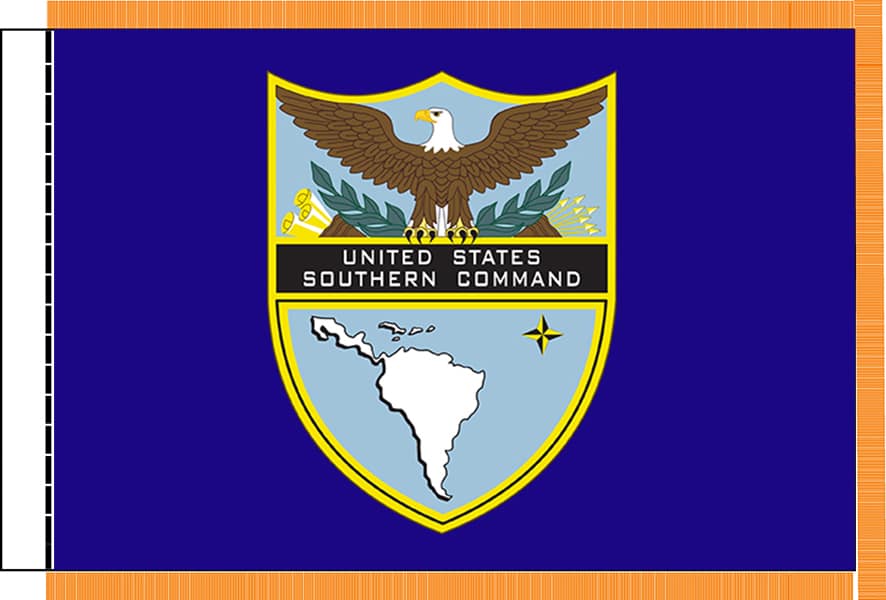
The broader regional picture reinforces the anxiety. U.S. Southern Command has expanded joint operations with Ecuador, secured a new basing arrangement with Paraguay, and pushed a hemispheric security agenda under the “Escudo das Américas” banner, even as long-standing joint exercises with Brazil’s own armed forces — including the Navy’s annual Formosa exercise and a planned Space Conference of the Americas in Brasília — have been quietly cancelled or scaled back by Washington. Add to that a 50% U.S. tariff increase on Brazilian goods imposed amid the broader diplomatic freeze, and Brazil’s government sees a pattern of pressure across trade, security, and diplomatic channels simultaneously.
Is an Actual Military Operation Likely?
Here the picture gets considerably more uncertain, and reasonable observers disagree. Several factors distinguish Brazil from Venezuela in ways that make a comparable operation harder to imagine in the near term:
Scale and standing: Brazil is a G20 economy, a nuclear-adjacent regional power with its own substantial armed forces, and a founding BRICS member — not an isolated, sanctioned state with a contested government the U.S. had already refused to recognize.
No comparable pretext (yet): The Venezuela operation followed years of the U.S. treating Maduro’s government itself as illegitimate. Lula is a democratically elected, internationally recognized head of state with normal diplomatic relations with Washington, however strained.
Vieira’s own framing: Itamaraty’s language was explicitly about risk and legal exposure, not an assessment that an operation is imminent or planned. The document itself notes Washington has not communicated any intention to act militarily.
At the same time, the analysts and commentators who’ve been tracking this closest — including legal scholars writing about the “prelude to force” question as early as March 2026 — argue the concern is not paranoid: designating a criminal group as a terrorist organization is precisely the legal step that preceded the use of force against boats and, ultimately, against Venezuela. Whether Brazil’s far greater size, institutional weight, and diplomatic standing make it a meaningfully harder target, or simply a slower one, is the real open question — and it’s one Brazilian officials clearly aren’t willing to bet on being reassured by scale alone.
The Domestic Political Fight Over “Unwillingness”
This is also where the story becomes a Brazilian political story, not just a bilateral one. Supporters of former President Jair Bolsonaro — whose son Eduardo has been seeking asylum in the U.S. amid the criminal proceedings against his father — have publicly campaigned for the American designation specifically as a way to spotlight what they characterize as the Lula government’s public security failures, with Brazil’s own presidential election scheduled for October 2026.
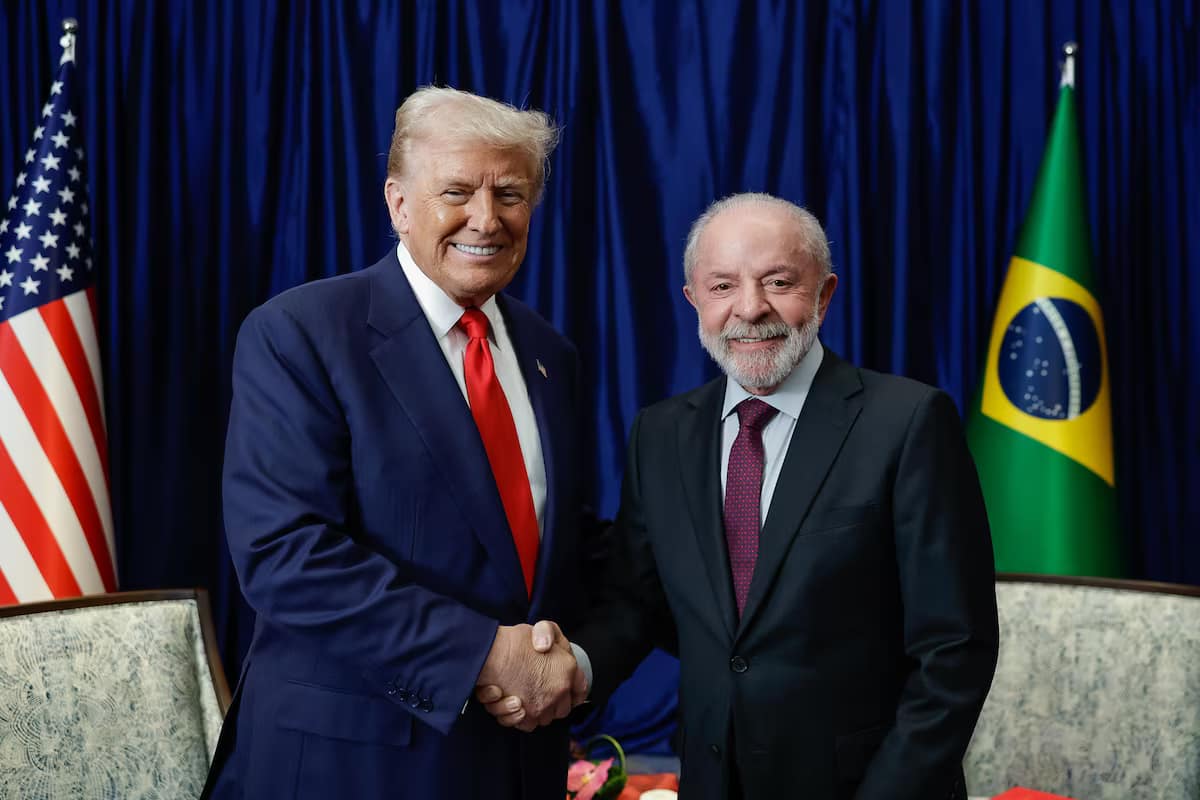
Lula and Donald Trump
Lula’s government firmly rejects the “unwillingness” framing. Its position is not that CV and PCC should be left alone, but that they are criminal, not ideological or political, organizations, and that fighting them is a matter for law enforcement cooperation and diplomacy rather than a terrorism framework borrowed from a different kind of threat. Brazilian authorities point to their own recent enforcement record as evidence of active engagement, including a major financial crackdown this year that uncovered billions of reais moved through fintech firms and shell companies allegedly tied to PCC money laundering, and an earlier operation that seized roughly $220 million in assets linked to the group’s infiltration of the fuel sector. Brazilian prosecutors involved in coordinating with U.S. counterparts have also warned that the terrorism label could backfire operationally, since it would shift information-sharing away from relatively open police-to-police channels and into more restricted, classified intelligence lanes — arguably making cooperation harder, not easier.
Whether that argument is a genuine operational objection or, as critics contend, a way of avoiding tougher action, is exactly the kind of empirical and political dispute that will likely be litigated all the way to October’s ballot box — with Itamaraty’s warning about military risk now sitting uncomfortably in the middle of that campaign.
This is a developing situation involving contested claims from multiple governments and political camps. Readers should follow official statements from Itamaraty, the U.S. State Department, and credible wire services for the latest developments.