


Water, a Shipping Container, and a Leak

The Inauguration That Became a Headache for Brazil’s Government
eyesonbrasil
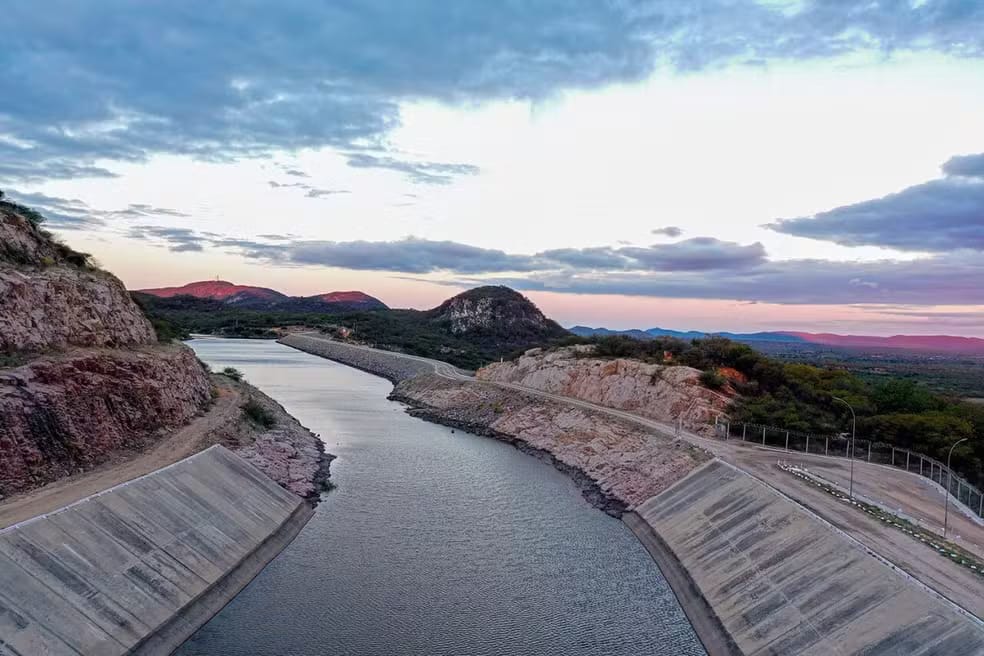
Less than 24 hours after President Luiz Inácio Lula da Silva inaugurated another stretch of Brazil’s long-promised São Francisco River water transposition project, drone footage showing leaks and ruptures in the newly delivered structure was already circulating on social media — reigniting distrust around one of the most controversial, and oldest, infrastructure projects in the country’s recent history.
What Actually Happened
On Thursday, July 2, Lula attended the inauguration of the Major Sales Tunnel, a 6.5-kilometer structure that is part of the Apodi Branch — a 115.5-km arm of the transposition project connecting Paraíba’s backlands to the western part of Rio Grande do Norte, expected to benefit roughly 750,000 people across 54 municipalities spanning Paraíba, Rio Grande do Norte, and Ceará. But at the ceremony in Luís Gomes, Rio Grande do Norte, the one thing missing was the water itself.
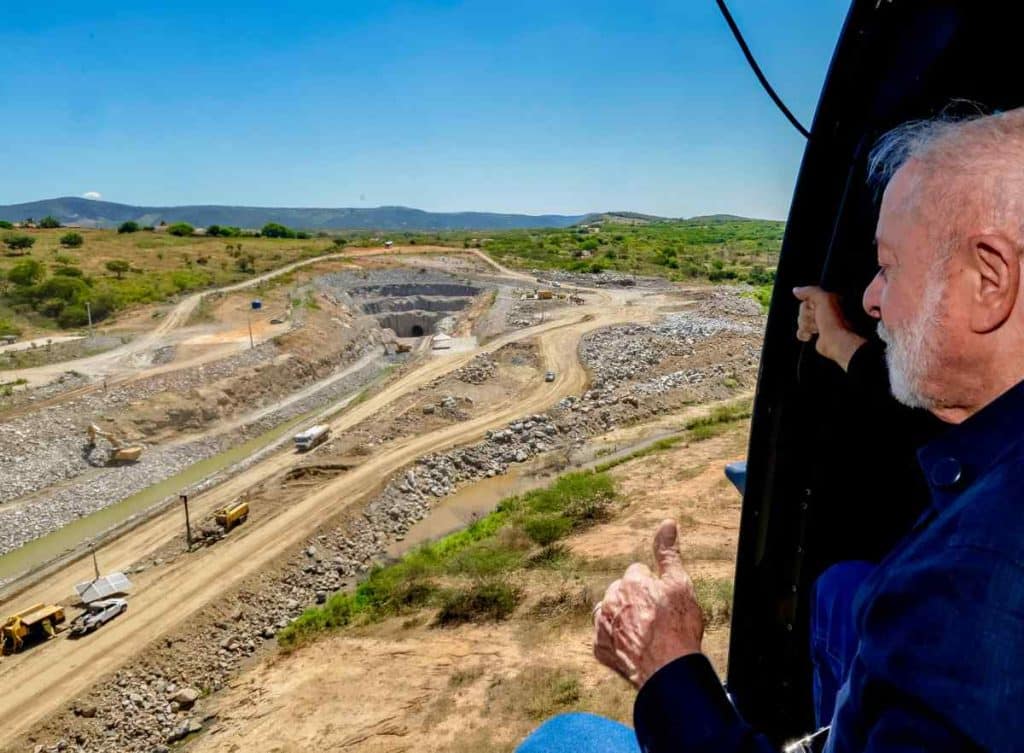
Lula acknowledged the problem publicly. According to the president, he had planned the visit specifically to watch the water arrive at the tunnel, but a “miscalculation” by the company responsible for the project delayed the flow. He flew over the stretch by helicopter and said he’d seen the water on its way, promising the local mayor it would arrive by midnight that same day.
That’s when things got worse. On Saturday, July 4, videos that went viral on social media showed points along the freshly inaugurated structure with intense leaks and ruptures in sections of piping and earthwork, water gushing out uncontrolled. Nilvan Ferreira, a pre-candidate for governor of Paraíba who had already been following and criticizing the project, shared the footage, describing the episode as a “burst” that occurred right after the official handover, and demanding the federal government explain the quality of the construction work.
The Container That Became the Symbol of the Controversy
If the leak raised technical concerns, it was a different image that dominated social media: a rusted metal shipping container, installed as a makeshift water crossing along another stretch of the Apodi Branch, in the municipality of José da Penha. The scene quickly became the informal symbol of the controversy — for critics, visual proof that a multibillion-real project, nearly two decades in the making, still needed improvised fixes to be delivered on the government’s political timeline.
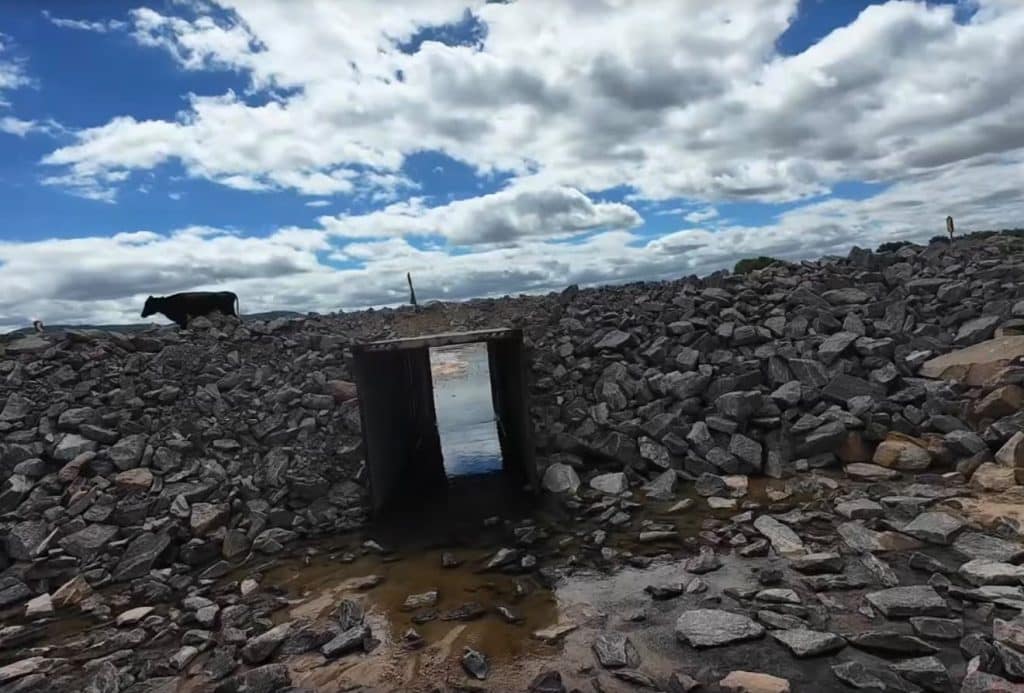
Ferreira was among the first to publicly seize on the image, calling the event a “container bridge” and saying the government was “treating the people of the Northeast like idiots” by inaugurating a structure he argued wasn’t actually finished.
A Race Against the Election Calendar
Part of the controversy has a scheduling explanation as much as an engineering one. Brazilian electoral law restricts public works inaugurations after a certain point ahead of elections, and the federal government had been racing to deliver stretches of the transposition project before the July 4 deadline. That rush — according to critics writing in Revista Crusoé — helps explain why temporary fixes, like the container, showed up in place of permanent crossings that hadn’t yet been completed.
The Presidential Palace, for its part, denied any structural failure. In a statement to the press, the Presidency said the tunnel was operational and that water was simply still making its way through the rest of the São Francisco River Integration Project’s system at the time of the ceremony, not yet having reached the tunnel’s entrance. As of the most recent reporting on the case, the Ministry of Regional Integration and Development had not issued a technical note detailing the causes of the leaks recorded days later, nor presented a repair plan.
A Project That Was Controversial From the Start
The episode adds to an already long history of setbacks for the transposition project — conceived as far back as the Brazilian Empire, revived by Lula in 2007, and delivered in piecemeal fashion by successive administrations. The project has previously suffered canal ruptures — as in Custódia, Pernambuco, in 2017 — reservoir leaks that forced the emergency evacuation of families, and prolonged shutdowns of pumping stations due to technical “anomalies,” episodes that together have already consumed roughly R$15 billion (about $2.7 billion) in investment.
It’s worth noting, though, that not every controversy surrounding the transposition project has held up to scrutiny: the federal government has previously had to publicly debunk rumors of sections being “buried” or blocked, fueled by images taken out of context. That doesn’t change the facts verified this week — the delayed water, the improvised container, and the leaks captured on video are all well documented — but it helps explain why the topic, decades after it began, remains fertile ground for both legitimate criticism and misinformation alike, especially in the run-up to a presidential election set for October.
For now, what remains is the image circulating online: a tunnel inaugurated without water, a shipping container standing in for piping elsewhere on the same project, and a government trying to explain, in the middle of election season, why a historic promise still stumbles over such basic details.
This is a developing and politically sensitive topic, with contested accounts between the government and opposition. Readers should follow official statements from the Ministry of Regional Integration and Development and the Presidency of the Republic for updates.