


The Bolsonaro Paradox

Can Flávio Save the Very System His Father’s Government Built?
eyesonbrasil
There’s an irony sitting at the center of Brazil’s trade fight with Washington that almost nobody on either side wants to say out loud: Pix — the instant payment system the Trump administration says is hurting American companies — was launched by the Banco Central do Brasil in November 2020, under the government of Jair Bolsonaro. The father built it. Now the son is trying to talk an American president out of taxing Brazil over it.
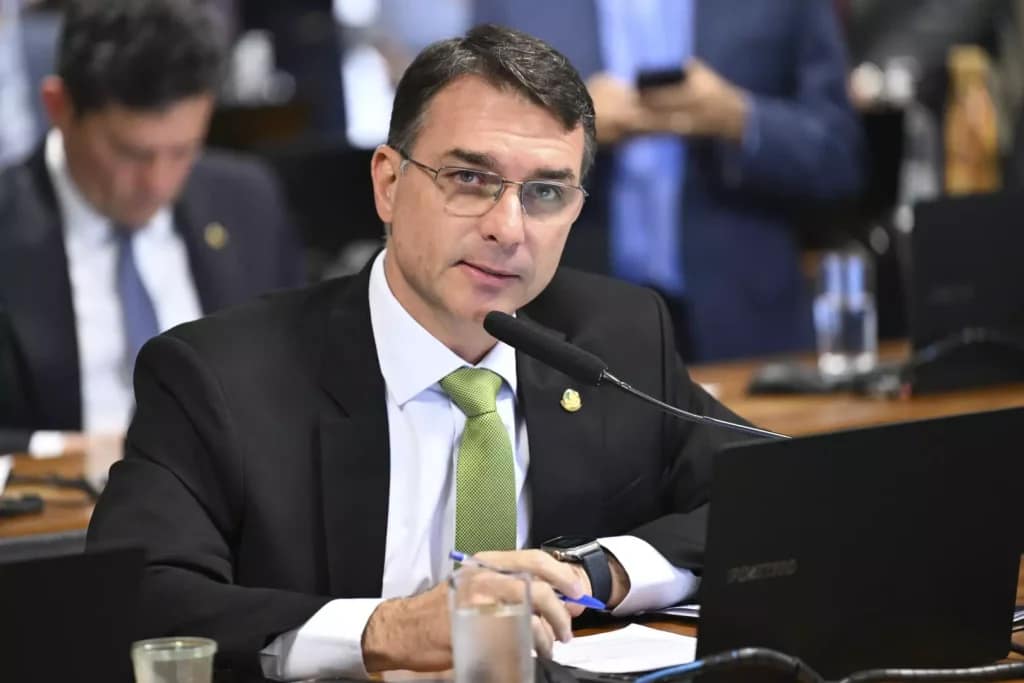
That’s the backdrop as Flávio Bolsonaro heads into the USTR’s July 6 hearing hoping to peel Pix out of a tariff package that, as things stand, threatens a 25% rate on Brazilian goods by the July 15 deadline. It’s worth understanding exactly what Pix is accused of — because the case against it is more technical, and more interesting, than “Brazil built something Americans don’t like.”
What Pix Actually Did
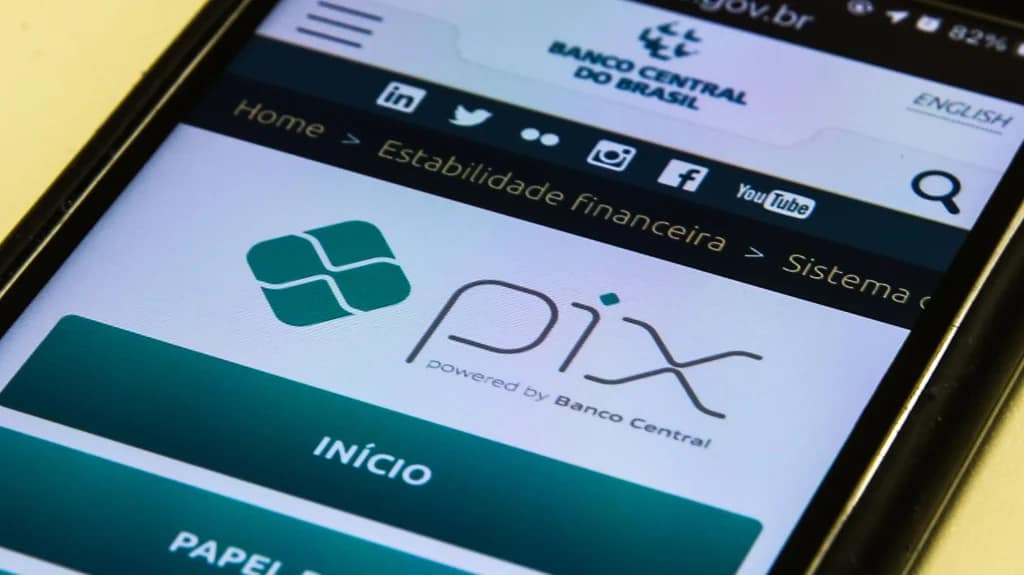
Pix is free, instant, and used by practically everyone in Brazil — University and central bank statistics put April’s transaction volume in the billions. It lets people and businesses move money in seconds via QR code or a simple key, with no card network, no merchant fee for individuals, and no need for Visa or Mastercard to sit in the middle of the transaction. For a country where a huge share of the population was unbanked or underbanked a decade ago, it has been transformative — a rare case of a government-built product actually working.
That success is precisely the problem, from Washington’s point of view.
The US Case, Stripped of the Politics
The USTR’s determination, released June 1, doesn’t argue Pix is poorly run. It argues Pix is unfairly run — that the Central Bank’s dual role as both the system’s regulator and its owner-operator creates a conflict of interest, with Brazil’s central bank acting as both regulator and owner/operator of the national instant payment system. From that conflict, USTR says four specific features tilt the playing field: Pix is mandatory for any financial institution with enough customers, it gets prominent default placement inside banking apps, it’s free for individual users, and fees charged to businesses are capped by regulation — a model that USTR says includes mandatory participation by large financial institutions, prominent placement of Pix alongside other payment options in banking apps, free access for individual users, and capped fees for businesses.
None of those features are secret design flaws — they’re exactly why Pix works as well as it does. But Visa and Mastercard have pushed precisely this argument for years, with Mastercard Brazil’s own president has publicly argued that the structure creates an inherent conflict of interest because the regulator is also a market participant competing directly with the private sector it oversees. Meta has its own stake too, having launched a WhatsApp payments feature just months before Pix’s 2020 rollout, only to watch the public system dominate the space instead.
What makes this case unusual, even by Section 301 standards, is the precedent it sets: this appears to be the first Section 301 case to treat a country’s domestic payment system as a US trade enforcement issue — a detail that’s reportedly drawing close attention in Europe too, where the European Central Bank’s digital-euro project raises some of the same regulatory-sovereignty questions.
Brazil’s Defense
Brazil’s response has been consistent: Pix is open-access infrastructure, not a protectionist weapon. Officials maintain that domestic and foreign companies are treated equally under Brazilian law, and the Central Bank has stressed that Pix functions as free, publicly operated infrastructure that is broadly used across the population. Brazilian banking federation Febraban has likewise pushed back on the favoritism allegations, defending the system’s open structure. The technical counterargument is straightforward: any institution, foreign or domestic, that meets the same account-volume threshold can plug into Pix on the same terms — the “discrimination,” in Brazil’s telling, is simply that Visa and Mastercard built a profit model that depended on a kind of friction Pix was specifically designed to remove.
That’s a harder argument to win in a USTR proceeding than it sounds. The Federal Register notice on the determination shows the agency directly engaged with — and rejected — exactly this defense, noting that comments describing satisfaction with Pix or its compliance with Brazilian law did not negate concerns regarding the conflict of interest or preferential treatment afforded to Pix by the Brazilian government. In other words: legality and popularity at home aren’t the test. The test, in USTR’s framing, is whether the structure burdens American competitors — and on that narrower question, Brazil is arguing a much harder case.
Can Flávio Actually Move This Needle?
This is where the senator’s odds look thin. A few structural realities work against him:
The hearing isn’t built for him. The July 6 session is designed primarily for private-sector and civil-society testimony — the same Visa, Mastercard, and tech-industry voices that built the original complaint — not for a Brazilian legislator running for president. Flávio’s request was for five minutes.
The case predates his diplomacy. Pix has been a USTR target since the original investigation opened in July 2025, well over a year before Flávio’s Oval Office visit. The conflict-of-interest theory was already fully formed, with industry comments and a formal hearing transcript, long before he got involved.
Lula’s government, not Flávio, holds the actual negotiating channel. Ambassador Jamieson Greer has said the US and Brazilian governments have held substantive negotiations directly, describing several constructive meetings with President Lula and his cabinet that have intensified in recent weeks — even while acknowledging substantial differences remain. That’s a government-to-government track. A senator showing up to ask for five minutes at a public hearing doesn’t sit on that track; he’s commenting on it from outside, the same as Mastercard or Febraban.
The clock is brutal. Written comments close July 1, the hearing is July 6, and the statutory deadline for the US to act is July 15. There simply isn’t much runway left for any single intervention — Flávio’s or anyone else’s — to meaningfully shift a determination that’s already been published in the Federal Register.
What Flávio can realistically do is symbolic and domestic: generate headlines, signal to voters that he’s “fighting” for Brazilian interests, and try to pry the Pix and tariff narrative away from Lula before October. Whether that counts as success depends entirely on which audience you’re asking. For Brazilian exporters waiting on an actual tariff number, the relevant negotiation is the one happening in closed-door consultations between Brasília and Washington — not a five-minute slot at a public hearing.
The Deeper Bet
If there’s a genuine victory available to Brazil here, it’s more likely to come from the technical negotiating track — Brazil offering some adjustment to Pix’s fee structure or onboarding rules for foreign providers — than from any single political actor’s personal lobbying, however many photos get taken in the Oval Office. The USTR’s own materials suggest exactly that kind of trade: comments asking whether tariff coverage should shift based on potential economic disruption, an opening Brazil’s negotiators are reportedly already trying to use.
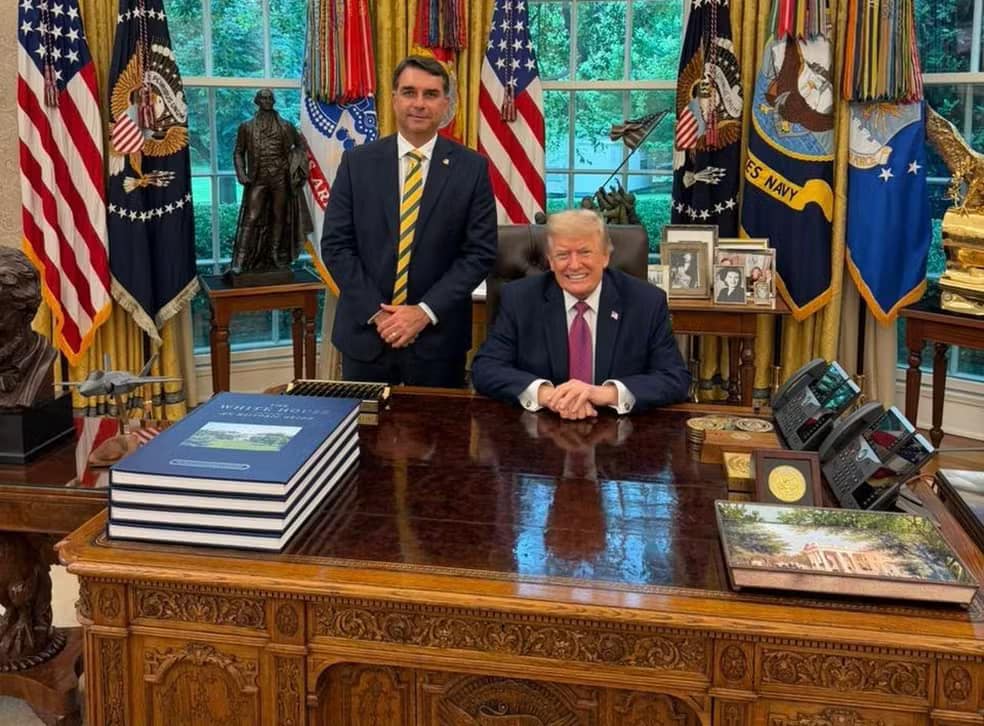
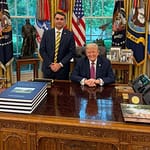
For Flávio, the more durable prize may not be the tariff outcome at all. It’s the campaign footage. Whether Pix survives this fight intact will likely be decided in rooms Flávio Bolsonaro never enters — but the photo of him standing next to Trump will outlast whatever the USTR ultimately decides, at least until October’s ballots are counted.
The Pix-related findings, deadlines, and quoted assessments above are drawn from USTR’s June 1, 2026 determination and related reporting; the underlying trade dispute remains unresolved as of this writing, with a statutory deadline of July 15, 2026.