


“TariFlávio”
Inside Flávio Bolsonaro’s Mission to Washington — and Lula’s Bet That It Backfires
eyesonbrasil
There’s a particular kind of political theater that only works when both sides need the audience to believe something different about the same scene. That’s roughly what’s been playing out between Brasília and Washington for the past month, as Senator Flávio Bolsonaro — son of the imprisoned former president and now a declared pré-candidato for the 2026 race — has positioned himself as Brazil’s unofficial trade envoy to Donald Trump, while the Lula government works just as hard to recast that same trip as a vanity project that achieved nothing.
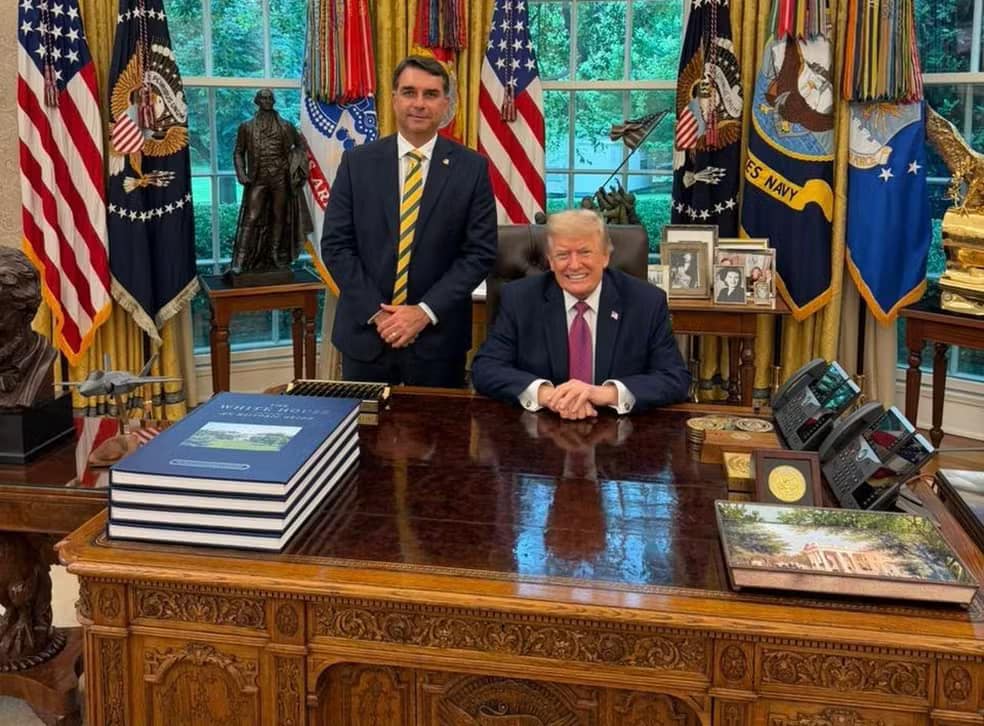
The Oval Office Photo Op
In late May, Flávio traveled to Washington without a confirmed appointment, hoping simply to get in the room with Trump. He got his photo: a thumbs-up beside the president in the Oval Office, quickly shared across social media as proof of access and relevance. What he didn’t get was a deal. Trump’s office stayed quiet on the substance of any meeting, and the underlying threat — a Section 301 investigation into Brazilian trade practices, from Pix to content-moderation rulings against US tech platforms — kept moving forward regardless.
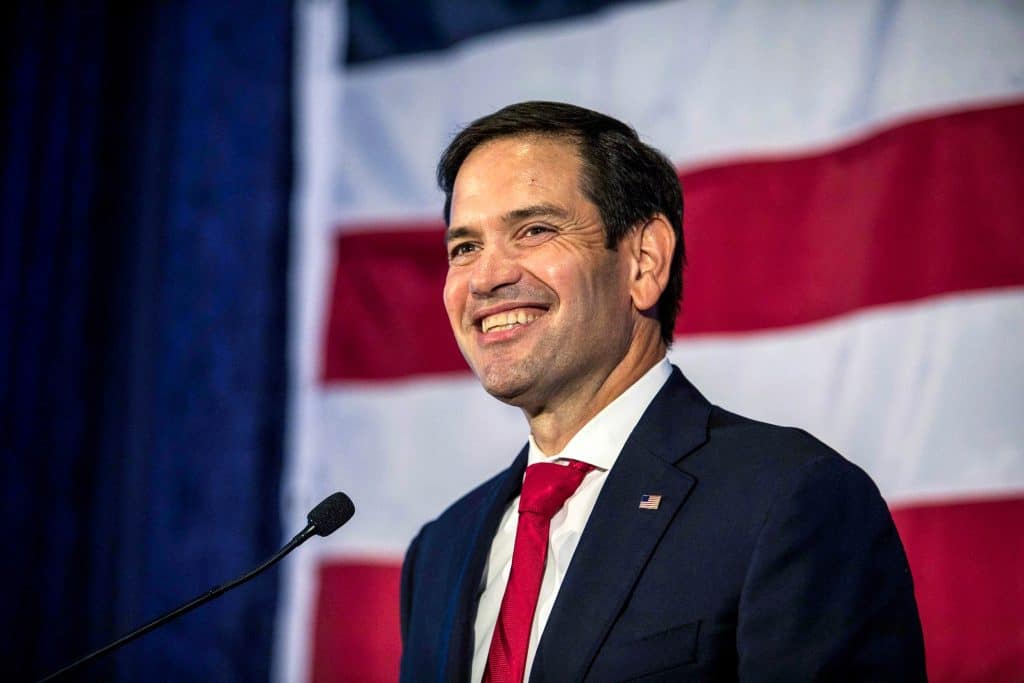
By June, the US Trade Representative’s office floated an additional 25% tariff on Brazilian goods, with a separate 12.5% surcharge potentially stacking on top. A final decision is expected after July 15. Flávio responded by writing to Secretary of State Marco Rubio asking Washington to spare Brazil, and by formally requesting five minutes to speak at a USTR public hearing on July 6 — a hearing, notably, built mainly for private-sector and civil-society input, not for Brazilian senators running for president.
Whose Tariff Is It, Anyway?
The senator’s framing has been consistent and pointed: this isn’t a tariff on Brazilian companies, he argues — it’s a tariff on Lula. He has said the companies aren’t really the target; rather, it’s the president himself, his conduct, his threats toward the United States, and what Flávio calls anti-American sentiment, with ideology placed ahead of the interests of the Brazilian people. He’s also taken pains to insist his Washington trip predates and is unconnected to the new tariff push, arguing the measures trace back to actions that began in 2025 and have nothing to do with his meeting with Trump the week prior.
That’s a careful piece of message discipline, and reportedly not an accident. Sources told CNN Brasil that Flávio was advised to distance himself from any rhetoric that sounded like he supported the tariffs landing on Brazil. The political risk is obvious: if voters conclude the Bolsonaro camp quietly welcomes — or even helped engineer — economic pain on Brazilian exporters as leverage to free Jair Bolsonaro from his 27-year sentence, that’s a story that could define the whole campaign before it properly starts.
Lula’s Government Smells an Opening
Unsurprisingly, the Planalto isn’t inclined to help Flávio thread that needle. Brazilian diplomatic sources, according to CNN Brasil’s reporting, view the Washington trip as little more than political theater, dismissing the idea that the pré-candidato has any real capacity to influence the tariff negotiations. Some of those sources go further: they’ve started attaching the nickname “TariFlávio” to the senator, tying his public image directly to the tariffs, and pointing out that parts of the Bolsonaro family had previously lobbied in favor of exactly this kind of pressure campaign.
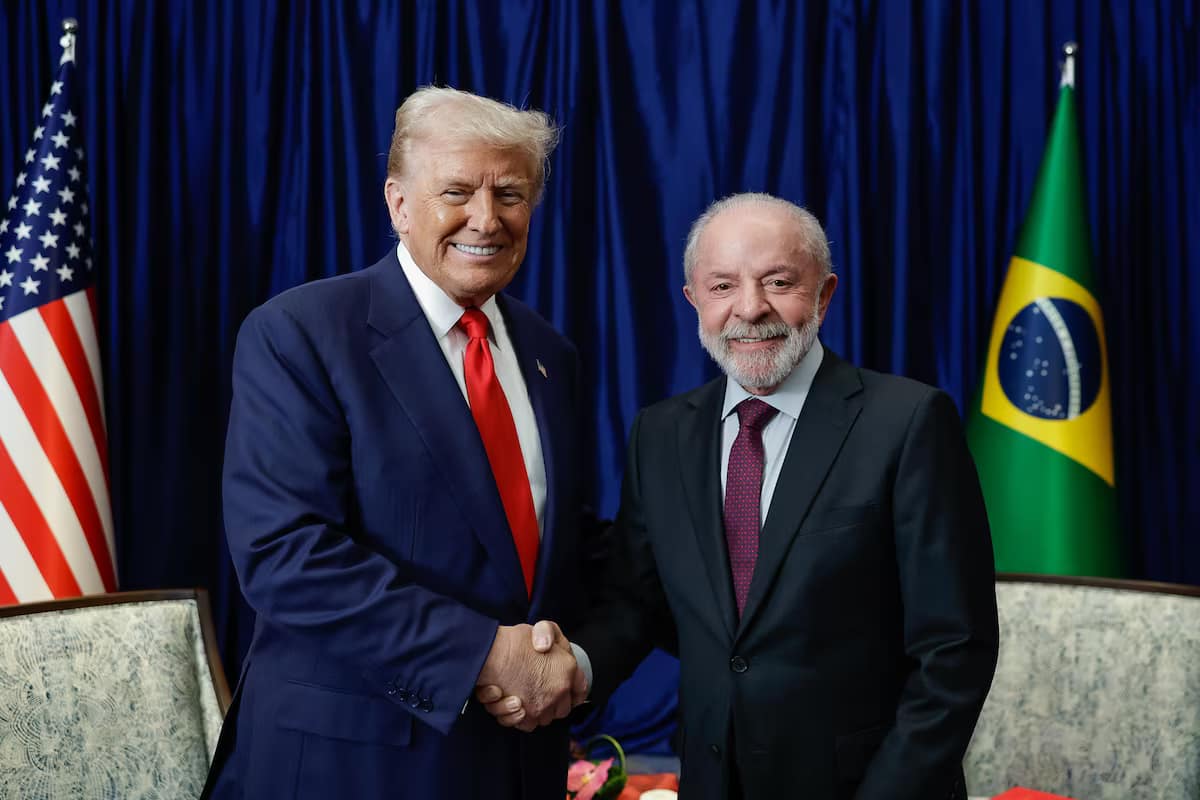
That nickname is doing real political work. It’s a one-word accusation: that Flávio isn’t fighting the tariffs, he’s the reason for them — or at least their most convenient face. If it sticks, every news cycle about the tariffs becomes, by association, a news cycle reminding voters whose family asked a foreign president to lean on Brazil’s institutions in the first place.
Flávio, naturally, sees the opposite chess move. He has accused Lula of deliberately doing nothing about the tariffs for electoral reasons, arguing the president believes the standoff could benefit him at the ballot box in October — even at the cost of Brazilian companies going under. He’s framed his USTR hearing request as defending the interests of the Brazilian people and trying to prevent further taxation of companies already burdened under Lula’s government.
The Real Stakes Behind the Symbolism
Strip away the dueling narratives and there’s a genuine economic question underneath: a final US decision is expected from July 15, with a 25% tariff under serious consideration following the trade investigation, on top of a separate 12.5% surcharge the White House has already signaled — and Brazil, grouped with several other countries hit by that 12.5% rate, has limited room to negotiate special treatment. Even so, the Brazilian government reportedly still sees a narrow opening to negotiate down the 25% rate, with technical talks between the two countries expected to continue.
This is the part that gets lost in the back-and-forth over photo ops and nicknames: whatever the verdict on Flávio’s political theater, actual Brazilian exporters — agribusiness, steel, manufacturing — are the ones left waiting on a decision shaped as much by Washington’s domestic politics as by anything happening in Brasília. The USTR’s underlying case, opened in mid-2025 under Section 301, cites a list of grievances well beyond simple trade economics: restrictions on political speech, the structure of Brazil’s Pix payment system, anti-corruption enforcement actions, ethanol tariffs, intellectual-property protections, and illegal deforestation. That’s a broad docket, and it means the dispute was never going to be resolved by one senator’s five minutes at a podium, however symbolically loaded that podium has become.
A Chess Game With No Clear Endgame Yet
What makes this particular episode interesting isn’t really the tariffs themselves — trade disputes between Brazil and the US predate this entire saga and will likely outlast it. It’s that both leading camps in next October’s election are trying to use the same set of tariffs as proof of the other side’s unfitness to govern. For Flávio, the tariffs are evidence of Lula’s recklessness and anti-American posturing. For the Lula government and its allies, the tariffs — and Flávio’s scramble to manage them — are evidence that the Bolsonaro family will always put its own legal and political survival ahead of the country’s economic interests.
Both arguments require the voter to ignore inconvenient details: Flávio’s camp would rather not dwell on the family’s history of lobbying for US pressure; Lula’s would rather not dwell on whether more assertive diplomacy might have blunted the tariff threat months ago. Some sources go so far as to call Flávio’s intervention “teatro,” a performance — a charge that, fair or not, will be hard for him to fully shake before October.
Trump, for his part, holds the only vote that actually counts in this particular round, and as of now he’s given neither side anything definitive to work with — just a photo, a pending decision, and a Brazilian campaign that’s already treating a trade dispute as the opening move of next year’s election.
This piece reflects competing political narratives from Brazil’s Bolsonaro-aligned and Lula-aligned camps as reported in the Brazilian press; readers should weigh both sides’ framing independently, as the underlying tariff decision remains unresolved.