Microsoft’s Secret Data Centers and Brazil’s Digital Revolution
Billions of dollars buried in the São Paulo countryside — and a deliberate silence about exactly where
eyesonbrasil
The Announcement That Wasn’t
Picture the scene: February 2026, São Paulo’s sleek convention circuit buzzing with executives, developers, and journalists gathered for the Microsoft AI Tour. Priscyla Laham, president of Microsoft Brasil — poised, precise, and clearly proud — takes the podium to announce a milestone that companies dream about for decades. Two brand-new data centers are now live in the state of São Paulo. Billions of reais of infrastructure, years of construction, a landmark moment for Brazil’s digital economy.
Priscyla Laham, president of Microsoft Brasil
Then a reporter raises a hand. Where are they?
Laham smiles. “I won’t be revealing the exact locations, for security reasons.”
The room rustles. Someone opens a laptop. Within minutes, Microsoft’s own website answers the question its president has just declined to.
Hortolândia. Sumaré. Two mid-sized cities in the greater Campinas metropolitan corridor, roughly 100 kilometers northwest of São Paulo city — and suddenly ground zero of one of the most significant technology investments in Latin American history.
The Scale of the Bet
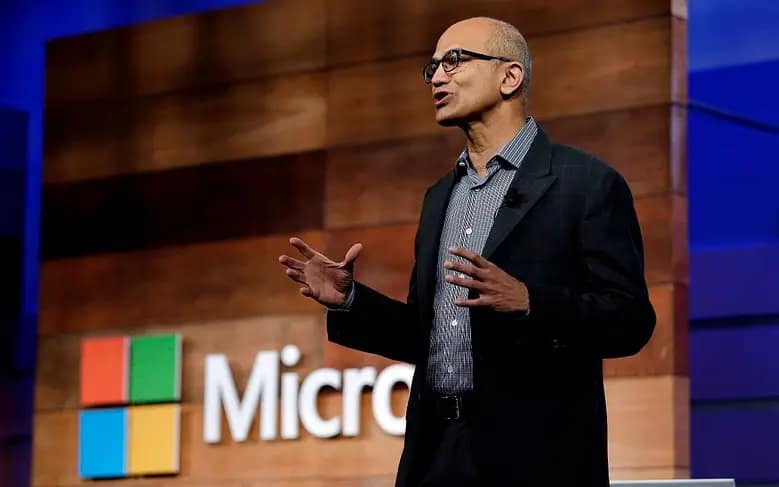
To understand why this moment matters, you have to step back to September 2024, when Microsoft CEO Satya Nadella stood before Brazilian cameras and made a promise of staggering proportions. Microsoft would invest R$14.7 billion — roughly US$2.7 billion — in cloud and artificial intelligence infrastructure in Brazil over three years, its largest single-country commitment in Latin America at the time.
Microsoft CEO Satya Nadella
“We are committed to supporting Brazil’s AI transformation and ensuring it benefits everyone,” Nadella said. “Our new investments in cloud and AI infrastructure and training in Brazil will help ensure broad access to both the technology and skills needed for Brazil’s people and economy to thrive in this AI era.”
Grand words. But tech giants promise things all the time. What happened next separated rhetoric from reality: the bulldozers moved in. Construction began on the Av. da Ligação location in Hortolândia in July 2024, with Microsoft publicly documenting its progress in its community updates for the greater Campinas area. A parallel site in Sumaré — labeled “Sumaré Leste” in internal documentation — broke ground at around the same time.
By January 2026, the works were complete, and the formal announcement came the following month at the AI Tour. The first two “data halls” were confirmed as “in operation,” with construction of additional units progressing on schedule. All external areas of the sites have been completed.
In the understated language of hyperscale real estate, that is a thunderclap.
Why the Campinas Corridor?
The choice of Hortolândia and Sumaré was not accidental. It was the product of years of calculation — geographic, economic, and energetic.
Microsoft had already launched its first Azure cloud region in Brazil out of Campinas back in 2014, and expanded it to three availability zones in 2021. The greater Campinas corridor had already proven itself: good fiber connectivity, proximity to São Paulo’s financial muscle without the real estate costs of the capital itself, and the existing industrial infrastructure of a city that has been Brazil’s technology manufacturing heartland since the 1980s.
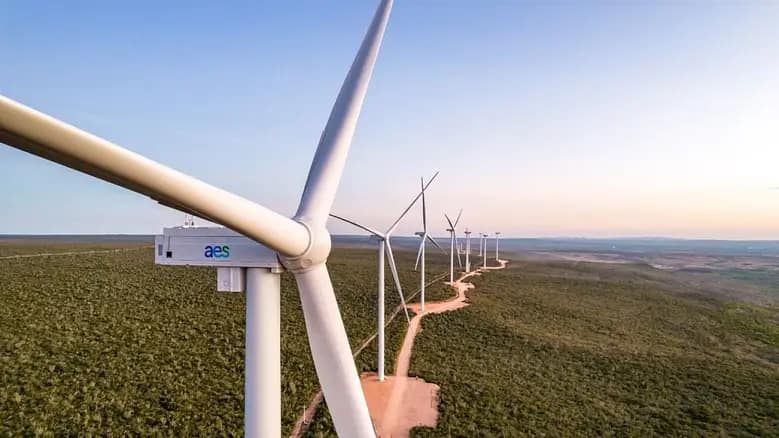
The general contractor Racional was brought in to lead construction across multiple campuses, and local authorities tracked the project as among the largest technology investments in the region’s recent history. Energy was another decisive factor: Microsoft had already signed a 15-year renewable energy contract with AES Brasil to offtake from the Cajuína Wind Complex in Rio Grande do Norte, which began commercial operations in July 2024 — providing the clean power supply that both Microsoft’s own sustainability commitments and Brazil’s new data center incentive framework require.
Cajuína Wind Complex in Rio Grande do Norte
Brazil’s 84% renewable grid is substantially underutilized, particularly in the Northeast where up to one-fifth of wind and solar generation goes wasted — a structural advantage that rivals like Chile, Mexico, or Colombia simply cannot match at scale.
The Secrecy Explained — and Its Limits
So why didn’t Laham just say “Sumaré and Hortolândia” and be done with it?
The answer is a fascinating intersection of genuine security doctrine and something that industry veterans will recognize as the grand theatrical tradition of hyperscale mystery.
The exact location of these installations is kept under strict secrecy for reasons of cybersecurity and physical security — a standard practice for critical infrastructure of this kind. The reasoning is real: a data center is not a factory or a shopping mall. It is a node of critical national and global infrastructure, housing the servers of banks, hospitals, government agencies, and multinationals. Knowing its precise address — street number, building layout, substation location — gives potential adversaries a physical attack vector. The industry increasingly accepts that data centers could be subject to physical threats, including electromagnetic pulse weapons or denial-of-service attacks on the local power grid.
And yet. Industry analysts have long noted the irony: the “secrecy” of hyperscale data center locations is, in most cases, a publicly known secret. About 5% of data centers listed on major industry tracking sites are listed with reference points rather than exact locations — but the facilities themselves are identifiable to anyone with Google Maps, local permit databases, and an afternoon to spare.
When providers try to maintain the reputation of their data center locations being secret, it often amounts to a kind of premium theater — it gives a more secure image and makes clients feel more secure. Microsoft’s own website, as Brazilian journalists quickly discovered, named Sumaré and Hortolândia directly. The secrecy, then, is less a fortress wall and more a professional norm — a signal to enterprise clients that Microsoft takes operational security seriously, even when the approximate locations are known.
Beyond Servers: Training 5 Million Brazilians
The infrastructure story is only half of Microsoft’s Brazilian ambition. The other half is human capital at a scale that has rarely been attempted in the Global South.
Microsoft launched its ConectAI program with a pledge to train 5 million Brazilians in AI-related skills by 2027. The company announced that since the program launched, 6.6 million Brazilians have already begun some form of AI training, and 2.8 million have completed their courses — numbers that already exceed the original target, before the deadline.
Laham was emphatic on this point at the AI Tour: “Brazil has everything it takes to be a technology hub for Latin America and also on the global stage. In the data centers, there are not only Brazilian clients but also regional and multinational ones. Our objective, obviously, is to focus on Brazilian companies and make them more competitive.”
This is the political intelligence embedded in the announcement. A foreign company dropping billions into servers risks the nationalist critique — that Brazil is becoming a “data colony,” exporting its citizens’ information as a raw material for Silicon Valley profit, the way it once exported brazilwood. By combining infrastructure investment with a skills program of genuine national scale, Microsoft is attempting to build a more durable economic legacy in the country — one that Brazilian politicians across the spectrum can point to with pride.
The REDATA Wildcard
Even as the concrete dried in Sumaré, a legislative drama was unfolding in Brasília that threatened to complicate Microsoft’s calculations.
Brazil’s government, trying to attract further hyperscale investment, created REDATA — a Special Tax Regime for Data Center Services that slashed the consolidated tax load on computing equipment to 18-20%, suspended import duties on gear without local equivalents, and for the first time linked incentives directly to sustainability and domestic capacity. In exchange for the tax breaks, companies must make available at least 10% of their processing capacity to the Brazilian domestic market, source 100% of their energy from renewable sources, and meet strict water-use efficiency metrics.
It is industrial policy dressed as a tax incentive — and it is a genuinely sophisticated piece of legislation. The Lula administration fused fiscal relief with industrial conditionality, demanding that hyperscalers localize research, grid integration, and training rather than simply rack servers and send profits home.
But REDATA had a turbulent birth. Brazil simultaneously introduced import tariffs of 12.6% to 25% on IT equipment through Resolution GECEX 852/2026 — directly contradicting REDATA’s incentives and making Brazil suddenly less competitive than Chile, Mexico, or Colombia, all of which maintain import tariffs for IT equipment between zero and 6%.
When Laham was asked about this contradiction at the AI Tour, her answer was diplomatic but firm: REDATA was “not changing what we agreed with Brazil.” Microsoft had locked in its commitments before the legislative chaos. But for future investors watching from the sidelines, the contradictions were a cautionary flag.
Brazil as a Regional Backbone
What Microsoft is building in the São Paulo interior is not merely serving Brazil. It is architecting a regional spine for Latin America’s digital future.
The data halls are designed to serve local, regional, and multinational clients simultaneously — Brazil is not merely an end market but a hub from which Microsoft can serve neighboring economies across the continent. Brazil is already connected to several major markets through around 15 submarine cables, and the broader data center ecosystem includes major players like AWS, Google, Oracle, IBM, Alibaba, and Huawei.
Analysts at BTG Pactual described Brazil and Chile as potentially becoming “a paradise” for the data center industry — but the continent-wide race is just beginning. Google, AWS, and Oracle are all expanding Brazilian footprints. Alibaba has announced new facilities. The Campinas corridor, which Microsoft chose for its Azure South region over a decade ago, is now becoming something close to the cloud capital of South America.
A Final Irony in the Silence
There is something quietly extraordinary about the scene in São Paulo that February morning — the president of one of the world’s most powerful companies, standing before a room full of journalists, declining to name two cities that were already on her company’s own website.
It speaks to a peculiar duality at the heart of the hyperscale era: investments so vast they reshape regional economies, yet wrapped in a deliberate opacity that the companies themselves don’t fully observe. The secrecy is real and the secrecy is theater, simultaneously. The data halls are hidden and they are visible, at once.
What is beyond debate is the scale of what is happening in the flat agricultural lands between Campinas and the São Paulo city limits. Microsoft’s campus strategy in the greater Campinas area is already being tracked by local authorities as among the largest technology investments in the region’s recent history — a distinction that will likely only grow as the remaining data halls come online and the REDATA regime stabilizes.
Sumaré and Hortolândia are not names that appear in travel guides. They are cities of factories, warehouses, and working-class neighborhoods that grew up in the shadow of Campinas’s industrial boom. Now, inside nondescript buildings designed to draw no attention, they house some of the most powerful computing infrastructure on the continent.
Brazil’s digital revolution doesn’t look like Silicon Valley. It looks like the São Paulo interior — flat, functional, and quietly changing everything.
This article reflects publicly available information and reporting current as of June 2026.