


Brasília Just Signed a Deal That Could Quietly Rewire Brazil’s Digital Future

eyesonbrasil
On June 12, 2026, in Brasília, two officials with long titles signed a document with an unglamorous name — the EU-Brazil Digital Partnership — and the kind of press coverage that rarely makes it past page six. No tariffs were cut. No state visit fanfare. And yet, for a country whose digital economy has spent two decades growing fast but governing itself piecemeal, this is one of the more consequential agreements Brazil has signed in years.
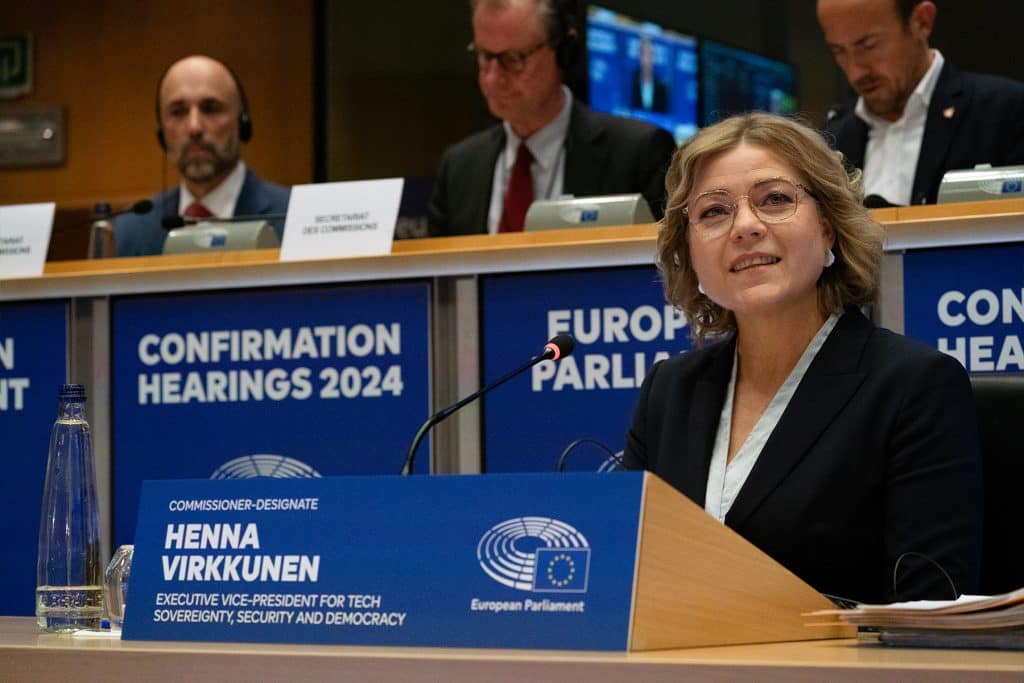
The deal was signed by Henna Virkkunen, the European Commission’s Executive Vice-President for Tech Sovereignty, Security and Democracy, and Alex Giacomelli da Silva, Brazil’s Secretary for Trade Promotion, Science, Technology, Innovation and Culture. It builds on more than two decades of EU-Brazil digital cooperation, but it does something those earlier dialogues never quite managed: it turns vague goodwill into structured, accountable machinery, with a Digital Partnership Council expected to hold its first meeting within the next year to set the roadmap and track progress.
Why This Matters More Than It Sounds
Brazil has never lacked digital talent or ambition. It has one of the largest fintech markets in the world, a thriving startup scene in São Paulo, and a government that’s been more willing than most of its neighbors to legislate on data and platforms. What it’s lacked is alignment — a clear, internationally recognized framework that lets Brazilian data, companies, and digital infrastructure plug into the world’s largest single market without friction at every border.
That’s precisely what this partnership starts to fix, and it didn’t appear out of nowhere. In January 2026, the European Commission and Brazil adopted mutual adequacy decisions, formally recognizing that the EU’s GDPR and Brazil’s LGPD offer comparable levels of data protection. That single technical decision matters enormously in practice: it lets businesses, researchers, and public authorities on both sides exchange data freely and securely, without the extra contractual hoops most non-EU countries have to jump through. The Digital Partnership builds directly on top of that foundation.
The Five Pillars
The partnership organizes cooperation around a defined set of shared priorities: data governance, artificial intelligence, digital infrastructure and connectivity, online platforms, and digital public goods and services. A few of these are worth unpacking, because each one points toward a different part of Brazil’s economy being reshaped.
Data governance. With adequacy now mutual, Brazilian companies — from fintechs to health-tech startups — can treat the EU less like a regulatory minefield and more like an extension of their home market. That’s a real competitive advantage over digital companies in countries that still need case-by-case data transfer agreements.
Artificial intelligence. As the EU pushes its AI Act outward as a template for global governance, Brazil gets a seat closer to the table rather than simply having rules imposed on it later. For a country racing to build its own AI strategy, having early, structured dialogue with the bloc writing the world’s most influential AI rulebook is a meaningful head start.
Platform accountability and child safety online. Alongside the main partnership, the European Commission and Brazil’s National Data Protection Authority (ANPD) signed a dedicated administrative agreement focused on protecting minors online, mirroring some of the enforcement logic behind the EU’s Digital Services Act — joint research, shared technical expertise, and cross-border strategies to tackle systemic online risks like inadequate age verification. This is one of the more politically resonant parts of the deal for ordinary Brazilian families, even if it gets the least international press.
Infrastructure, connectivity, and supply chains. Because digital sovereignty is also about hardware, not just code, the two sides have set up an early-warning information exchange designed to anticipate market disruptions, secure access to critical minerals, and build more resilient global supply chains for semiconductor manufacturing. For Brazil — rich in the raw materials the chip industry needs but historically absent from the manufacturing value chain — this is a door that has rarely been this openly offered.
What This Could Mean for Brazil’s Future
It’s worth being honest about scale: this is a framework, not a finished outcome. The real impact depends on what gets built inside it over the next several years through the technical workstreams and the Digital Partnership Council’s roadmap. But frameworks shape incentives long before they show up in GDP statistics, and a few shifts already look plausible.
For Brazilian tech entrepreneurs, easier, lower-friction data flows with the EU lower one of the biggest invisible costs of scaling internationally — legal uncertainty. A São Paulo health-tech startup that wants European users no longer needs the same expensive compliance scaffolding it would for, say, expanding into a market without an adequacy decision.
For policymakers, having a recognized, EU-aligned data protection regime becomes a selling point when courting foreign tech investment — a credibility signal that Brazil is a serious, rules-based place to build, not a regulatory wildcard.
For Brazilian semiconductor and critical-mineral interests, the supply-chain piece of this deal opens a long-term path toward something Brazil has wanted for decades: moving up the value chain from raw materials exporter toward becoming a real node in global chip manufacturing.
And for ordinary Brazilians, particularly families, the child-safety cooperation with the ANPD signals that platform accountability — a frequent source of public frustration — now has an international partner pushing in the same direction as domestic regulators, rather than Brazil tackling it alone against the lobbying weight of global tech platforms.
As Virkkunen put it at the signing, the goal is a digital transformation that’s “human-centric and inclusive,” shaped jointly rather than imposed by whichever bloc moves first. For Brazil, that framing matters. The country has spent years navigating a digital world largely defined by US platforms and Chinese hardware. A structured, EU-anchored partnership doesn’t replace either of those relationships — but it gives Brazil a third anchor point, and arguably the one most willing to negotiate as an equal rather than a customer.
The partnership won’t show up in next quarter’s economic data. But two decades from now, when people ask when Brazil’s tech sector started writing its own rules instead of just adopting everyone else’s, June 12, 2026, in Brasília may be the answer nobody expected to matter this much.