


The Redirection of Waste

Inside Brazil’s Plastic Recycling Revolution
eyesonbrasil
Brazil is the largest producer of plastic in Latin America, generating more than 7 million tons of the material annually. Historically, only a fraction of this volume found its way back into the production cycle, while the rest burdened municipal infrastructure or escaped into vulnerable ecosystems.
Today, a paradigm shift is underway. Driven by the expansion of the Recircula Brasil traceability platform, strict environmental regulations, and over R$31 billion in projected industrial investments between 2025 and 2027, pioneering projects are transforming plastic from a linear liability into a high-value circular asset. From the coastal hubs of Rio to the industrial heartlands of São Paulo, these projects are redefining the intersection of technology, social equity, and materials science.
1. Molecular Alchemy: Molecular and Chemical Pyrolysis
While mechanical recycling efficiently processes clean, rigid plastics like PET water bottles, it struggles with flexible films, contaminated food packaging, and mixed-polymer structures. To solve this, Brazilian research institutes and industrial giants are scaling advanced chemical recycling—essentially breaking down plastic molecules to their baseline elements.
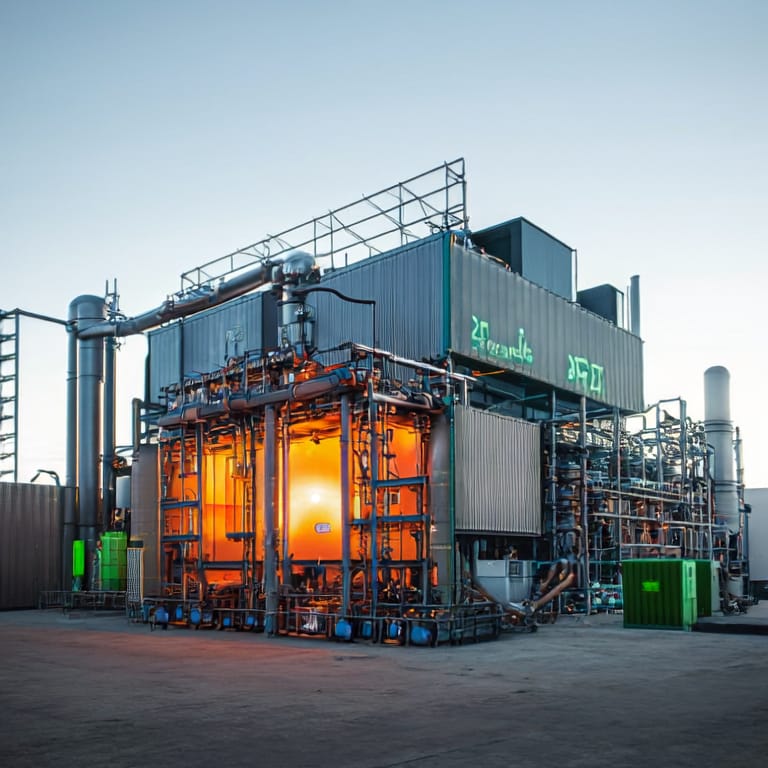
In Rio de Janeiro, a landmark partnership between the Federal University of Rio de Janeiro (COPPE/UFRJ), FLUXO, and the ENESPA Group has launched the KUBUS Pyrolysis Plant. Supported by Petrobras, this modular system uses thermal degradation inside a hermetically sealed, oxygen-free reactor to convert polyolefin-based plastic waste (like Polyethylene and Polypropylene) into high-quality Pyrolysis Oil (PPO).
[Plastic Waste (PE/PP)] ➔ [Extruder Compaction] ➔ [Pyrolysis Reactor (400°C–500°C)] ➔ [Condensation] ➔ [Pyrolysis Oil]
This oil is then channeled directly back into the petrochemical industry as a premium raw material, effectively replacing virgin crude oil. Simultaneously, companies like Braskem are pioneering non-pyrolysis catalyst technologies at their Triunfo Innovation Center to process complex multi-layer packaging, unlocking options for materials previously bound for landfills.

2. The Human Engine: Cooperative Professionalization
In Brazil, the circular economy does not function without the human element. Waste picker organizations (catadores) handle the vast majority of the country’s primary material sorting. Pioneering projects are focusing heavily on transitioning these loose cooperatives into formalized, tech-driven social enterprises.
The “Recycling that Transforms” initiative—a multi-sector partnership between materials science leader Dow, environmental solutions multinational Ambipar, and Gaia Social—is pioneering the Plastic Protocol. This standardized methodology trains waste pickers in Jundiaí and Recife to optimize sorting efficiency.

Impact Metric: The Plastic Protocol has expanded the types of recyclable plastics successfully processed by local cooperatives from 15 categories to up to 25 distinct material variations.
By professionalizing management, improving infrastructure, and directly involving a workforce that is 64% female, the project secures high-purity plastic streams for industries while generating equitable income for local communities.
3. Redesigning the Vessel: Monomaterials and Eco-Bricks
True circularity begins at the drawing board. If a package is designed with multiple layers of incompatible materials (such as plastic fused to aluminum foil), it is dead on arrival at a recycling plant.
Brazilian manufacturers are turning to advanced design-for-environment methodologies:
- Monobloc Packaging: Backed by a €65 million investment from the International Finance Corporation (IFC), America Embalagens has modernized its industrial lines in São Paulo to manufacture rigid packaging and cosmetic tubes utilizing up to 80% post-consumer recycled (PCR) resin. By shifting completely to monomaterial structures and lightweighting, the packaging remains fully recyclable at the end of its life cycle.
- Decentralized Upcycling: Innovation is also occurring at the grassroots level. In Barreiras, Bahia, young student innovators have developed prototypes for ecological construction bricks. By blending discarded everyday plastics (PET, HDPE, and PVC) with cement, fine sand, and agricultural waste like coconut fiber, they have created lightweight, high-resistance building blocks that trap plastic within the built environment.
The Coordinated Horizon
The evolution of Brazil’s plastic landscape highlights a crucial lesson: isolated innovation is insufficient. The projects scaling successfully are those connecting the laboratory to the cooperative, and the product designer to the consumer. Through this integrated approach, Brazil is proving that mitigating plastic waste is not just an ecological obligation, but an industrial opportunity.