


The Ship That Never Needs a Gas Station

Inside Japan’s Seawater-Powered Energy Vessel
eyesonindonesia
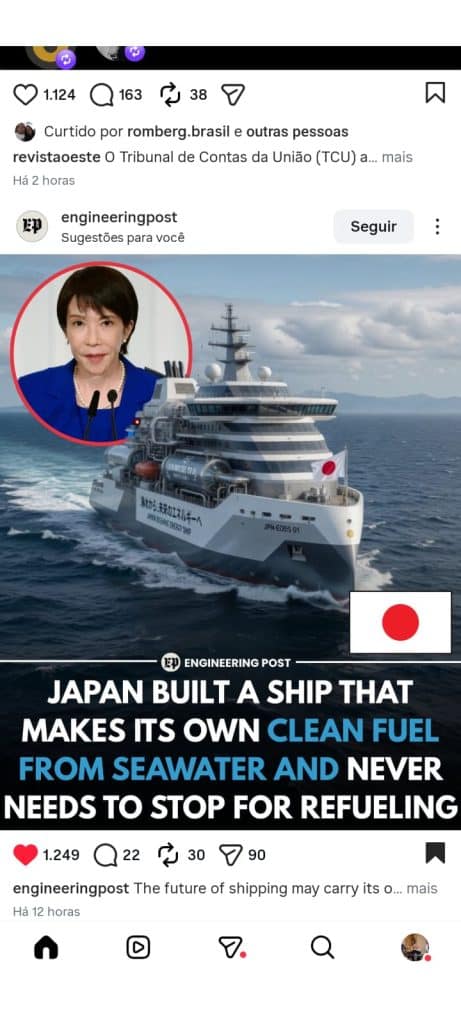
There’s a viral image making the rounds: a sleek white research ship slicing through Pacific waters, its hull painted with the words “海水から、未来のエネルギーへ” — “From seawater, to the energy of the future.” The caption claims Japan has built a vessel that makes its own clean fuel and never needs to stop for refueling. It sounds almost too good to be true. As it turns out, the real technology behind that claim is just as compelling as the headline — even if the full-scale version is still on its way to the open ocean.
The real project behind the post
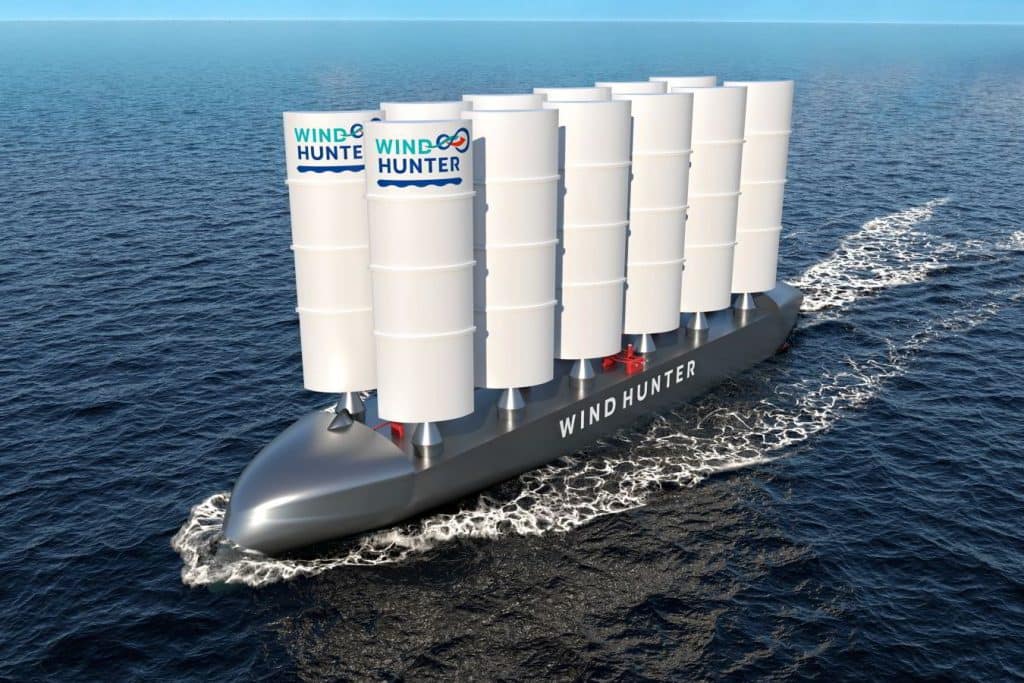
The concept matches a Japanese maritime initiative called Wind Hunter, led by shipping giant Mitsui O.S.K. Lines (MOL) as part of the company’s “Green Ocean Shift” strategy toward net-zero emissions. The idea is elegantly simple: build a ship that is, at the same time, a moving offshore wind turbine and a floating hydrogen plant.
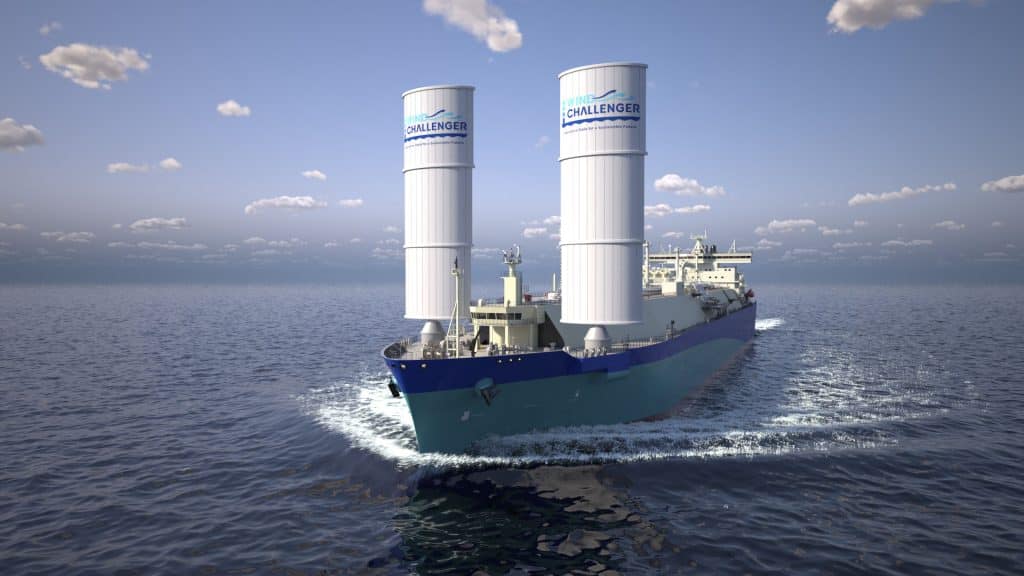
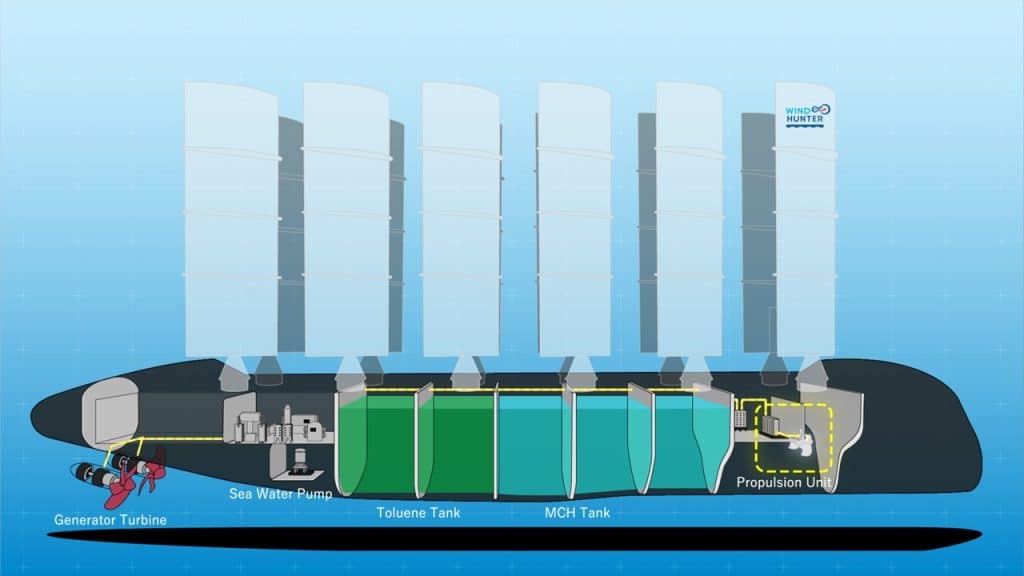
Here’s how it works. As the vessel sails, it unfurls rigid sails — technology MOL already uses commercially on its “Wind Challenger” cargo ships — to harness offshore wind. Underwater turbines mounted on the hull spin as the ship moves, generating electricity. That electricity is fed into an onboard electrolyzer, which splits seawater into hydrogen and oxygen. The hydrogen is then converted into a stable, transportable liquid carrier called methylcyclohexane (MCH) for safe storage. When the wind dies down, the ship can burn its own stored hydrogen through fuel cells to keep moving — turning the entire voyage into a closed loop of production and consumption.
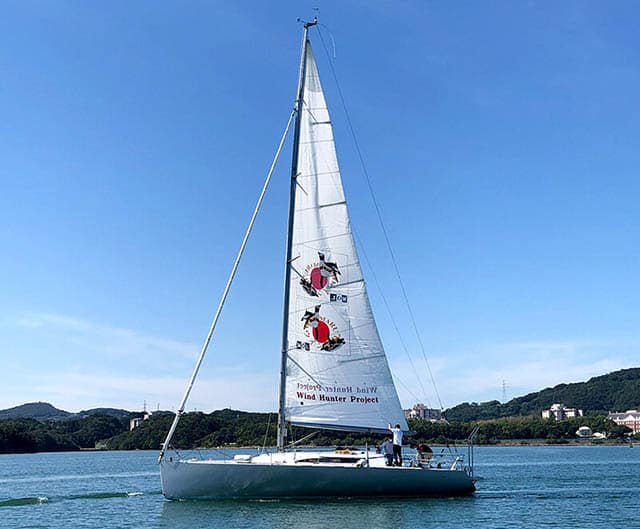
In early 2025, MOL proved the concept actually works. Its demonstrator, a 12-meter retrofitted yacht named Winz Maru, sailed out into Omura Bay near Nagasaki, generated green hydrogen at sea, converted it to MCH, and delivered it back to shore in Tokyo — the first time in the world a ship has produced hydrogen offshore and supplied it for use on land. It was a small boat with a small footprint, but it was real, and it worked.
From yacht to fleet
Winz Maru was always meant to be a proof of concept rather than the finished product — and that’s likely why the image in the post looks so much more ambitious than a 12-meter pleasure yacht. MOL has stated it’s now investigating a larger, full-scale demonstration vessel, with commercial operation targeted for the early 2030s. If it succeeds, the implications are significant: cargo ships that don’t just reduce their carbon footprint, but actively manufacture clean fuel as they travel, untethered from ports, pipelines, or refueling schedules. For an industry responsible for roughly 3% of global greenhouse gas emissions, and one where Japan has positioned itself as a leading exporter of decarbonization technology, that’s not a small ambition.
It’s worth being precise about the moment we’re in: the seawater-to-hydrogen ship in wide circulation online is best understood as the vision of where this technology is headed, built on a working — but still modest — proof of concept rather than an operational ocean-crossing fleet today.
A final thought: how does this compare to Brazil’s JAQ H1?
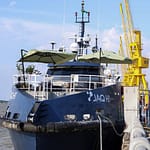
Brazil has its own entry into the clean-shipping race, and it’s worth holding the two side by side. The JAQ H1, a 36-meter vessel launched by Grupo Náutica and unveiled at COP30 in Belém, represents a different philosophy: rather than generating its own fuel at sea, it runs on green hydrogen produced onshore, supplying its hotel systems — lighting, climate control, internal power — entirely with H2V, and is being fitted with a dual-fuel engine capable of a 20% hydrogen blend that cuts emissions by up to 80%. JAQ H1 is conceived primarily as a floating laboratory and classroom, touring Brazilian ports to demonstrate hydrogen technology and train the workforce for the country’s emerging hydrogen economy, with a fully self-sufficient successor, JAQ H2, planned for 2027.
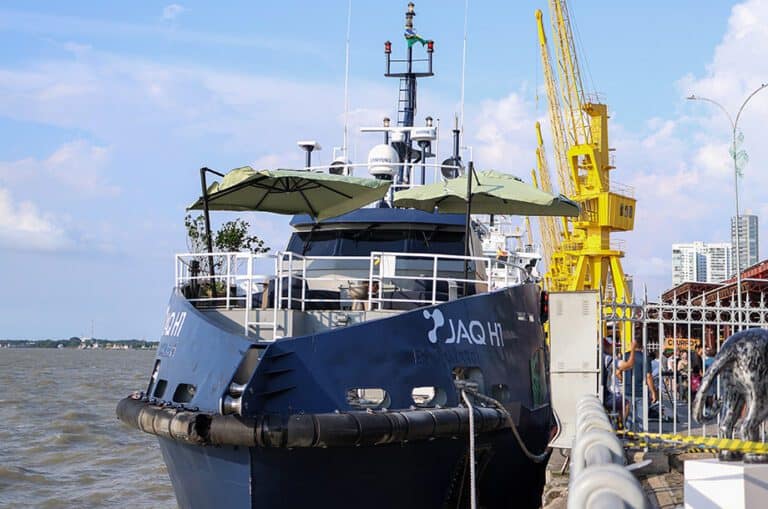
The contrast is instructive. Japan’s Wind Hunter concept aims for energy independence at sea — a ship that harvests its own fuel from wind and water mid-voyage, with no need to return to a hydrogen terminal at all. Brazil’s JAQ H1 takes the more immediately practical route: importing clean hydrogen made onshore and proving, port by port, that the fuel and the engines that burn it are ready for commercial life today. One is a bet on what shipping could become; the other is a working demonstration of what’s already possible. Together, they capture the two paths the maritime industry is racing down simultaneously — generate the fuel anywhere, or simply get hydrogen-ready ships on the water now. Either way, the age of ships that quietly decarbonize the seas is no longer a concept. It’s launching.