When Robots Meet Regenerative Farming: The Dutch Model

eyesoneurope
For decades, “biological” or organic farming and high-tech automation seemed like opposites — one rooted in traditional, hands-on stewardship of the soil, the other associated with industrial-scale, chemical-intensive agriculture. That divide is closing fast, and nowhere is this more visible than in the Netherlands, a country that farms more food per square kilometer than almost anywhere on Earth while facing intense pressure to cut chemical inputs.
The paradox organic growers have always faced is labor. Without herbicides, weeds have to be removed some other way — and hand-weeding a field of carrots or onions is backbreaking, expensive, and increasingly hard to staff. This is exactly the gap AI-driven robots and drones are stepping into, not by replacing biological methods, but by making them commercially viable at scale.
Seeing the field differently
Drones equipped with multispectral cameras can now fly over a field and spot a weed infestation, a fungal disease, or a nutrient deficiency days before it’s visible to the naked eye. In Dutch flower and bulb regions, growers use this kind of aerial monitoring to detect weeds like hedge bindweed growing through lily fields, which used to require close manual inspection. The same principle extends into greenhouses, where drones fly through the structures to detect plant diseases and search out weeds among tulip and lily crops.
This shift matters for organic farming specifically because the whole discipline depends on catching problems early and treating them locally, rather than blanketing a field with a preventive spray. A drone that can tell a farmer exactly which ten square meters need attention turns “no chemicals” from a limitation into an efficiency advantage.
Robots that pull weeds instead of spraying them
The most striking Dutch example is Odd.Bot, a startup that grew out of a student project at Delft University of Technology and has since worked closely with Wageningen University & Research. Its autonomous robot, now sold as the “Maverick,” uses AI vision and small robotic gripper arms to identify and physically pluck weeds out of the soil, working day and night with roughly 2-millimeter precision, removing over 240,000 weeds per acre.
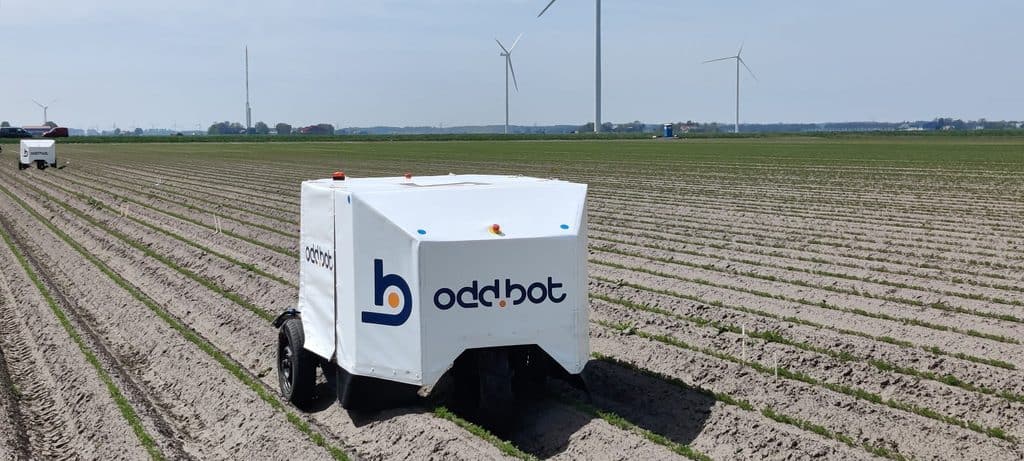
The economics are what make this a genuine turning point rather than a novelty. At We Grow Organic Farm in Zeewolde, a 240-hectare organic arable operation, hand-weeding a hectare of carrots takes about 100 hours and costs roughly €2,500 — a cost that keeps climbing as farm labor grows scarcer. Owner Thijs Geerse has found the robot doesn’t just cut costs; it recognizes and removes young, small weeds even more precisely than human weeders, working autonomously around the clock. The farm’s experience mattered enough that Odd.Bot expanded rapidly, and by 2025 the company had deployed more than ten autonomous weeding robots across Dutch fields for the growing season, working with distribution partner Weevers Mechanisatie.
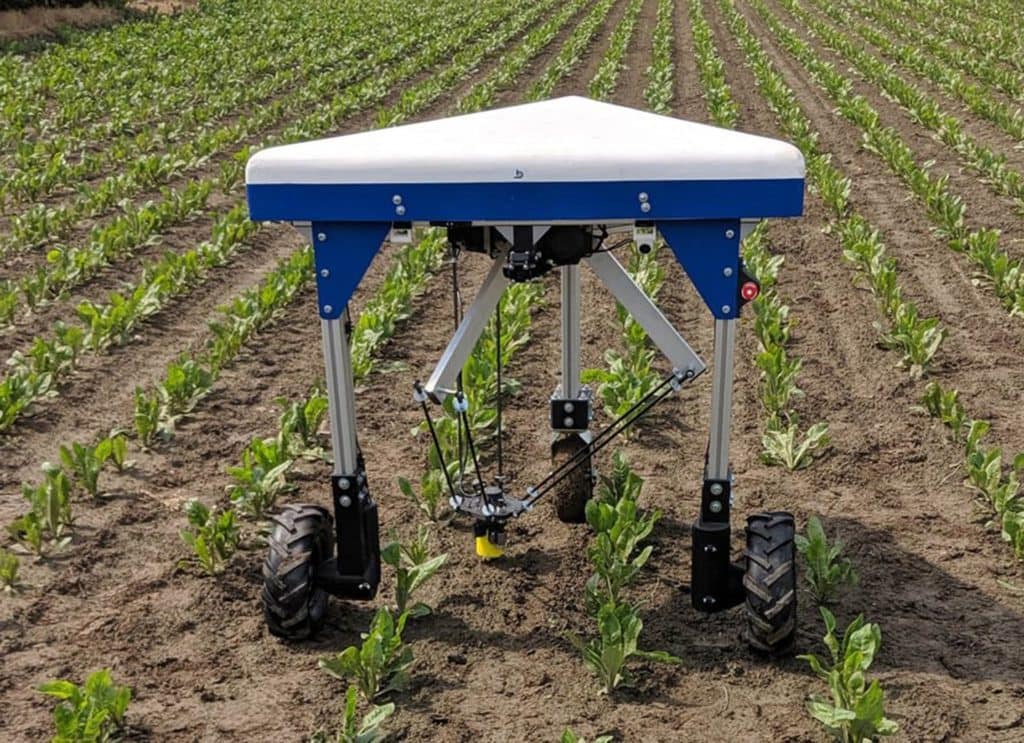
There’s a circularity angle too: the weeds these robots pull aren’t waste. According to Odd.Bot, removed weeds can be used as green manure to improve soil quality, and the robots run fully electric, giving a zero-emission alternative to diesel-powered cultivation. Retailers are taking notice — Lidl Netherlands has backed pilots with Odd.Bot as part of its own strategy on biodiversity restoration.
Beyond weeding: swarms, lasers, and AI advisors
Dutch innovation in this space goes well beyond one company. At the annual Dutch Arable Farming Day in Lelystad, hosted by Wageningen University & Research, visitors could watch mechanical and laser weeding robots working alongside drones spreading fertiliser, and even try “Botato,” a research prototype AI chatbot linked to farm-mapping data that answers potato growers’ questions about crop disease and expected yields.
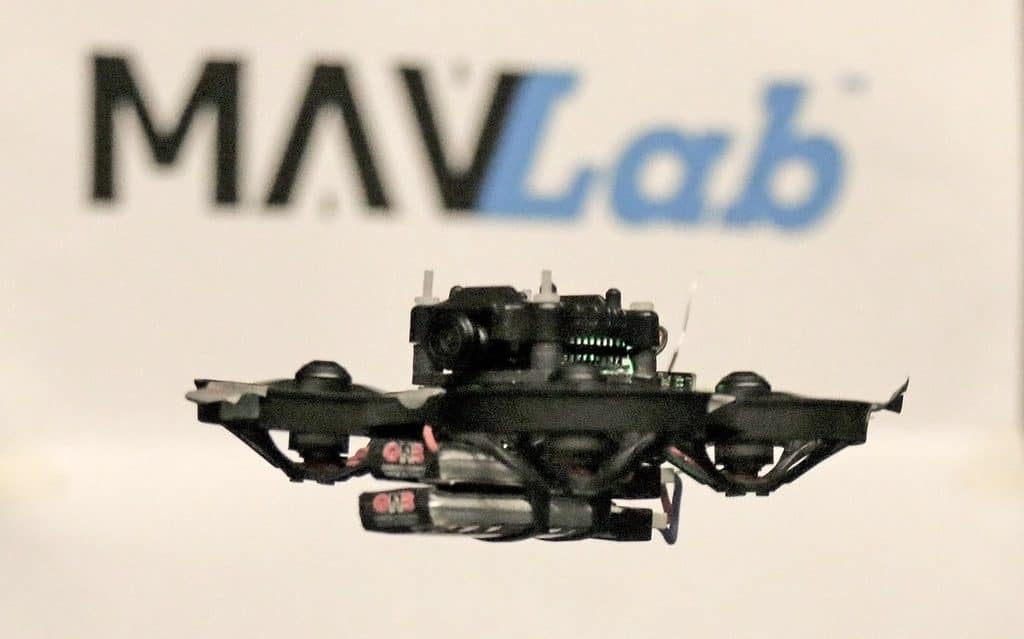
At Delft’s dedicated robotics campus, researchers have pushed the technology in a different direction entirely: TU Delft’s MAVLab has developed swarms of tiny drones capable of mapping hard-to-reach areas, with potential applications that include monitoring agricultural crops. Elsewhere, Dutch startups are experimenting with drones as a form of biological pest control — quadcopters that act as an early warning system by detecting and chasing off harmful insects, functioning much like swallows or bats do naturally, without any spraying at all.
Policy is pulling in the same direction
None of this is happening in a vacuum. The Dutch government has set a target of 25% of agricultural land being organic by 2030, backed by roughly €1.8 billion in sustainable agriculture investment, alongside a dedicated €200 million innovation fund for smart farming and agri-robotics technologies. That’s created real financial gravity pulling biological methods and automation together, rather than treating them as separate tracks.
Why this matters beyond the Netherlands
The Dutch experiments suggest a template other countries are watching closely: AI and robotics don’t have to mean more industrial-scale, high-input farming. Applied well, they can be the thing that finally makes low-input, biologically grounded farming affordable at commercial scale — turning what used to be a niche, labor-intensive choice into a mainstream one. A robot that pulls weeds by hand, one at a time, all night long, is in some ways closer to traditional organic values than a machine that sprays — it’s just doing the old job with new eyes.