Tilly Norwood Goes to Amsterdam

Inside the AI Actor Debate Splitting the Media Industry
eyesoneurope
Amsterdam, September 11, 2026 – She doesn’t have a heartbeat, a childhood, or an agent (yet). But this September, Tilly Norwood — the world’s first AI “actor” — walked onto the biggest stage in broadcasting and told a room full of television executives that she comes in peace.
Who (or what) is Tilly Norwood?
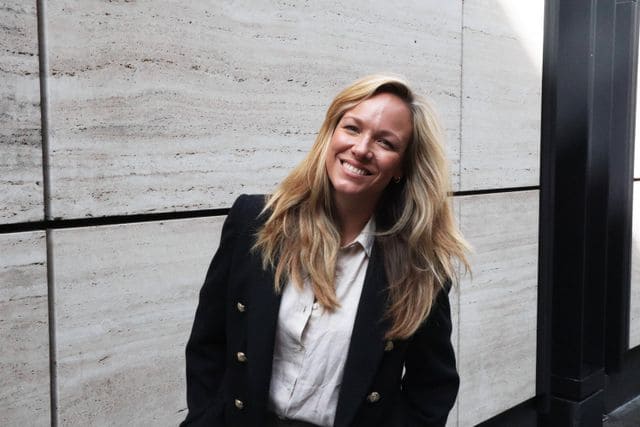
Tilly Norwood is a digital character built with generative AI, created in 2025 by Xicoia, the AI division of the London production company Particle6, founded by Dutch actor-producer Eline van der Velden. She isn’t a scanned or de-aged version of a real performer — she’s assembled from scratch: a consistent face, voice, personality, and “brand biography” engineered by a human creative team using a pipeline that reportedly took 15 people and thousands of creative iterations to build.
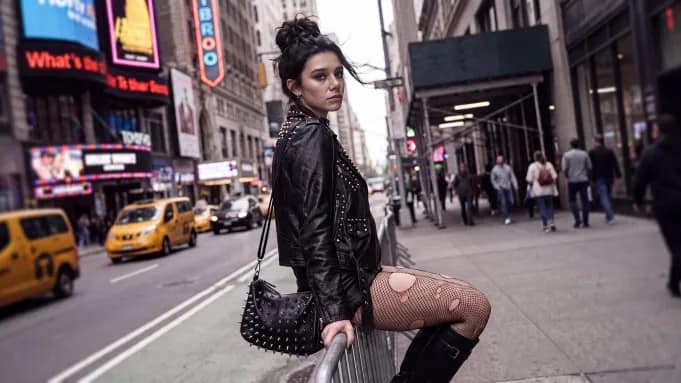
Her first appearance was a comedy sketch called “AI Commissioner” in mid-2025, which drew unflattering reviews from outlets including The Guardian and The A.V. Club. The real firestorm started weeks later at the Zurich Film Festival’s industry summit, where van der Velden revealed that talent agencies were reportedly interested in signing Norwood, with her stated ambition being for Norwood to become a digital answer to Scarlett Johansson or Natalie Portman.
That announcement detonated across Hollywood. Actors including Emily Blunt, Melissa Barrera, Toni Collette, and Whoopi Goldberg publicly condemned the idea, and the actors’ union SAG-AFTRA issued a statement arguing that an AI “is not an actor” and has no lived experience to draw from, warning that such characters risk being built on the uncredited, uncompensated work of real performers. Van der Velden has since said she received death threats over the project — while insisting Norwood was designed to provoke exactly this kind of debate.
From sketch to feature film
In July 2026, Particle6 raised the stakes: Norwood would headline “Misaligned,” billed as a comedy-drama coming-of-age story set inside the “Tillyverse,” a digital realm where an AI being with no body or lived experience is coaxed by a “rogue bot” into developing very human desires — and very human shame about how she was made. The film is explicitly a hybrid production: Particle6 says it has “retrained and upskilled” more than 30 traditional film and TV professionals — directors, writers, editors — to work alongside AI specialists, framing the project as much as a training ground for human filmmakers as a vehicle for Norwood herself.
As of now, “Misaligned” remains in early development with no release date, and van der Velden has acknowledged that the studio’s tools can currently generate only around 30 seconds of usable footage at a time — a reminder of how far the technology still has to go before matching the ambition of the announcement.
The IBC Amsterdam moment
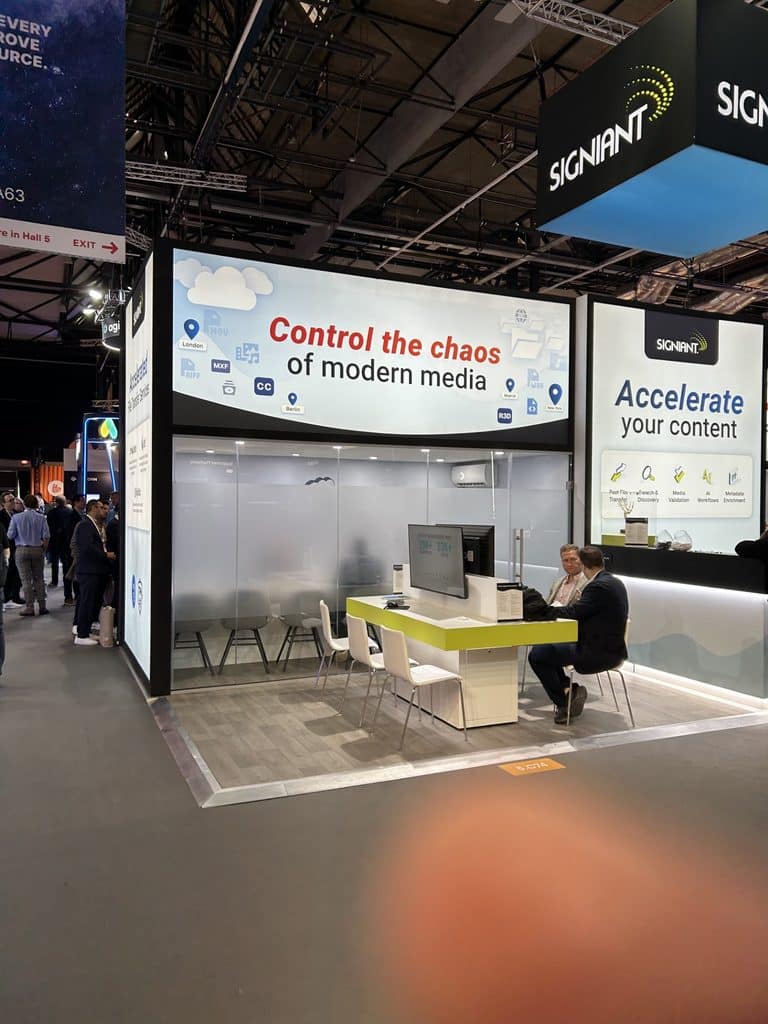
The controversy reached a new milestone at IBC2026, the major broadcast and media technology conference held in Amsterdam, where van der Velden opened the entire conference program with a keynote titled “Disrupt, Innovate, Create: How to Embrace AI” — appearing on stage virtually alongside Norwood herself, in what organizers described as the character’s first live interview. Under notably heavy security, Norwood fielded questions from the audience about her own guardrails and design parameters before van der Velden steered the conversation toward the bigger picture.
Her framing was pointed: rather than compete in a geopolitical “AI arms race” between major powers, she argued, media companies can win by applying creativity on top of AI that others are building, made “wilder and more creative” than anyone expects. She cited internal figures suggesting Norwood draws roughly one negative reaction for every four or five positive ones online, and cast the entire project as an exercise in helping the industry “future-proof” itself for a wave of change she considers inevitable. Norwood, for her part, described her own role in more modest terms — less a threat to human performers, more a new kind of creative tool.
Traditional media vs. digital-native players: two very different postures
What made the IBC keynote notable wasn’t just Norwood’s appearance — it was who she was sharing the stage and program with. IBC2026’s speaker roster read like a cross-section of the entire industry’s anxiety and appetite for AI at once: legacy broadcasters and studios (BBC Studios, ITV, CNN, Canal+, Globo, Warner Bros. Discovery, Banijay) sitting alongside platform and technology giants (YouTube, Meta, Netflix, Snap, Google, JioStar). That lineup captures a genuine divide in how the industry is reacting.
Digital-native and platform companies have tended to treat tools like Norwood as a natural extension of trends they’re already comfortable with — synthetic media, algorithmic content pipelines, and creator-economy production at scale. Their public sessions at IBC focused on distribution, engagement, and how AI-assisted workflows fit into a world already built around user-generated and machine-assisted content. For platforms whose businesses are built on volume and iteration, an AI performer is less a philosophical rupture than a new production input to be tested, measured, and optimized — much like the metrics van der Velden herself cited on engagement and sentiment.
Traditional broadcasters and studios, by contrast, have approached the same technology far more cautiously, and often through the lens of labor, trust, and authorship rather than novelty. Executives from organizations like the BBC, Canal+, and CNN used their own IBC sessions to talk about AI mainly as a production or newsroom efficiency tool — not as a replacement for on-screen talent — and the broader industry reaction to Norwood from actors, unions, and many working filmmakers has remained openly hostile, centered on consent, compensation, and the erosion of what makes performance human in the first place. Netflix’s own IBC session on production, for instance, focused on virtual production and cloud-based workflows — evolutionary tools for human-led filmmaking — rather than synthetic performers headlining a story.
That contrast is really a difference in what each side is optimizing for. Platform and tech companies are largely asking what can AI produce, and how fast? Broadcasters, studios, and performer unions are asking who is accountable for what AI produces, and at whose expense? Van der Velden’s own answer — that Norwood was built with publicly available tools she has “limited visibility” into, and that “it’s been trained on all of us” — is precisely the sentence that keeps those two camps from fully agreeing.
Why this matters beyond the headlines
Strip away the spectacle of a talking AI on a conference stage, and “Misaligned” and the Tilly Norwood saga point to a real fork in the road for the media industry: will AI performers be treated as a new creative medium — comparable to animation, CGI, or puppetry, each of which expanded what storytelling could do without erasing live performance — or as a direct, uncompensated substitute for the people currently working in film and television? IBC2026’s own programming suggests the industry hasn’t settled the question so much as scheduled it as a permanent agenda item, alongside AI in newsrooms, live sport production, and the creator economy.
For students and young filmmakers watching this unfold, the more useful takeaway may not be “should AI actors exist,” but “who ends up controlling the pipeline.” Particle6’s own pitch is that hybrid productions like “Misaligned” create new hands-on roles for people who understand both storytelling craft and AI tools — prompt engineers, AI-assisted editors, hybrid directors. Whether that’s a genuine on-ramp into the industry or a rebranding of disruption remains, like the film itself, still very much in development.
Sources: Reuters/Deadline/Variety/Hollywood Reporter/TVNewsCheck/IBC.org reporting on Tilly Norwood, Particle6, and IBC2026, September 2025–September 2026.
eyesoneurope
From Hollywood backlashes to the stage at IBC Amsterdam, AI actor Tilly Norwood has sparked a fierce debate between legacy studios and tech platforms over ethics, labor, and the future of media.